Uncategorized
Best Wall Mount Garage Door Opener
Sep
Best Wall Mount Garage Door Opener: 7 Buying Tips
Choosing the best wall mount garage door opener requires more than comparing brands or looking for the highest-rated model. A wall-mounted opener has a different installation arrangement from a traditional ceiling-mounted system, so the garage door, torsion bar arrangement, available wall space, and manufacturer requirements all need to be considered.
Wall mount garage door openers can be useful when homeowners want to free up overhead space or use an opener that mounts beside the garage door. However, not every garage door is automatically compatible with every wall-mounted system.
This guide explains the main factors to consider when choosing a wall-mounted opener, including installation requirements, compatibility, garage layout, operating needs, safety, and manufacturer specifications. For more buying information, visit our Garage Door Operator Buying Guides.

What Is a Wall Mount Garage Door Opener?
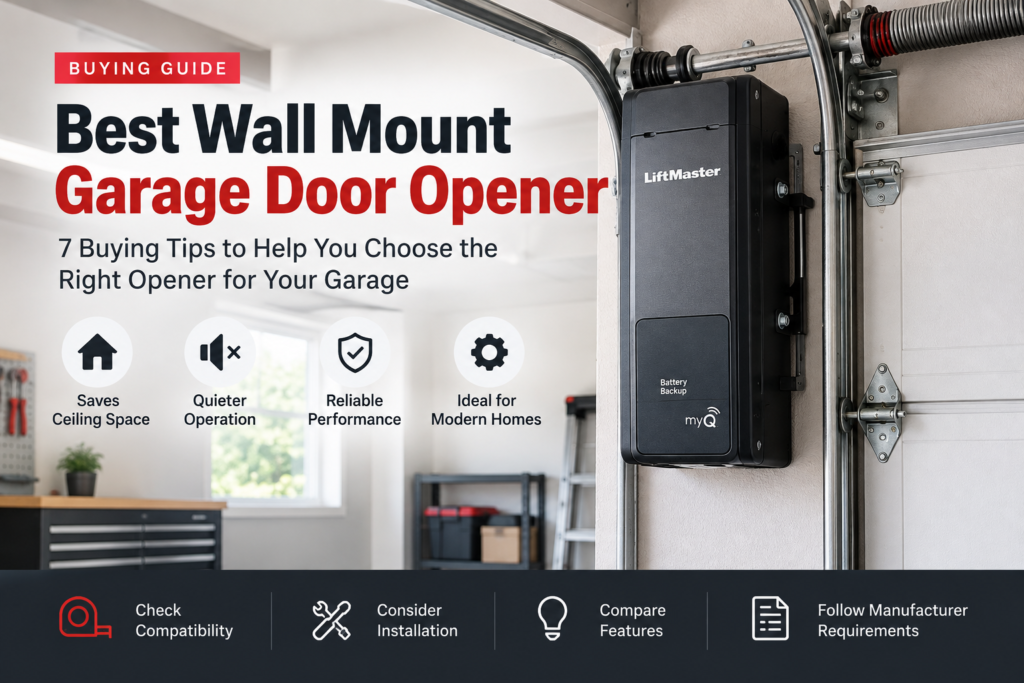
A wall mount garage door opener is designed to mount beside the garage door rather than using the traditional overhead operator arrangement. These systems are commonly associated with jackshaft-style operation, where the opener works with the garage door’s torsion bar arrangement.
The wall-mounted design can change how space is used inside the garage. Instead of occupying the central overhead area, the operator is positioned beside the door. LiftMaster describes its wall-mount design as a way to free up overhead garage space. See the LiftMaster space-saving opener guide for additional manufacturer information.
If you are researching the best wall mount garage door opener, it is therefore important to understand the installation arrangement before comparing features or prices.
A wall-mounted opener is not simply a ceiling-mounted opener moved to a different position. The garage door hardware, torsion bar, mounting surface, and opener requirements must all be suitable for the installation. These details should be checked before deciding whether a particular best wall mount garage door opener is suitable for the garage.
7 Factors for Choosing a Wall Mount Opener
Finding the best wall mount garage door opener starts with evaluating the complete application. Consider these seven factors before making a purchase.
1. Garage Door Compatibility
Compatibility should be one of the first things you check. A wall-mounted opener is designed for specific garage door arrangements, so you should not assume that any sectional garage door can use any wall-mounted model.
Check the manufacturer’s documentation for the opener you are considering. Pay attention to the type of door, shaft arrangement, mounting requirements, and other installation conditions. These checks help narrow the best wall mount garage door opener options to models that actually fit the application.
The best wall mount garage door opener for one garage may not be the correct choice for another garage if the door hardware or installation conditions are different.
2. Available Wall and Ceiling Space
One of the major reasons homeowners consider a wall-mounted system is space. Because the operator is installed beside the garage door, the overhead area can remain more open.
This can be useful in garages where overhead storage, lighting, or a cleaner ceiling arrangement is important. LiftMaster specifically describes wall-mount systems as a space-saving option that can free overhead garage space. Its official space-saving opener information provides additional details.
However, you still need adequate wall space and a suitable structural mounting surface. The available space beside the door should be evaluated before purchasing. This is an essential step when comparing the best wall mount garage door opener for a particular garage.
When comparing the best wall mount garage door opener options, measure the available side space rather than assuming that the opener will fit.
3. Mounting Surface
The mounting surface is an important part of the installation. The opener must be secured to a suitable structural surface according to the manufacturer’s instructions.
For example, LiftMaster installation documentation for a wall-mounted opener specifies securing the mounting bracket to a solid surface and provides additional requirements for masonry and structural support. Review the LiftMaster wall-mount product guide for manufacturer information.
Drywall by itself should not be treated as adequate structural support simply because it is located beside the garage door. Follow the installation instructions for the specific opener and use the required structural attachment points.
Before choosing the best wall mount garage door opener, identify where the mounting bracket can be securely installed.
4. Torsion Bar and Shaft Arrangement
Wall-mounted jackshaft-style openers typically work with the garage door’s torsion bar or shaft arrangement. This makes the existing door hardware an important part of the selection process.
The shaft must be suitable for the selected opener and the opener must be positioned and aligned according to the manufacturer’s requirements.
LiftMaster’s installation instructions, for example, provide positioning and alignment information for wall-mounted installations. Review the official LiftMaster product guide for the applicable model.
If you are unsure whether your existing shaft arrangement is suitable, have the installation evaluated rather than guessing. This is particularly important when replacing an existing opener with a different mounting configuration. Shaft compatibility can determine whether a best wall mount garage door opener option can be used at all.
5. Noise and Vibration
Noise can be an important consideration when choosing a garage door opener, especially when living areas or bedrooms are near the garage.
Wall-mounted systems can reduce some of the noise and vibration associated with an overhead operator arrangement because the operator is mounted beside the door rather than suspended from the ceiling. LiftMaster specifically discusses wall-mount openers in relation to reducing noise and vibration transmitted through the ceiling. See its quiet home garage guide for additional manufacturer information.
However, the overall noise level of a garage door system depends on more than the opener itself. Door hardware, rollers, springs, hinges, tracks, and the condition of the garage door can also affect the sound produced during operation.
Therefore, when searching for the best wall mount garage door opener, consider the complete garage door system rather than treating the opener as the only source of noise.
6. Safety and Operating Requirements
Safety features and installation requirements should be reviewed before purchasing any garage door opener. Follow the manufacturer’s instructions for safety devices, controls, mounting, and operation.
A wall-mounted opener should not be selected simply because it saves space. The entire installation must meet the manufacturer’s requirements for the garage door and opener.
If the garage door binds, sticks, or is out of balance, the problem should be addressed before relying on a new opener. LiftMaster’s installation documentation specifically addresses proper door operation and installation safety. Review the LiftMaster wall-mount product guide for model-specific information.
Safety should therefore be part of the decision when comparing the best wall mount garage door opener for your installation.
7. Manufacturer Specifications
Finally, use the manufacturer’s specifications as the final reference before ordering. Product documentation can provide information about door requirements, installation, mounting, features, operating limits, and accessories.
Manufacturer documentation is particularly important because wall-mounted openers can have specific installation requirements that are different from conventional ceiling-mounted systems.
For example, current LiftMaster wall-mount documentation shows that different models can have different specifications and intended applications. Its current 98022 page provides model-specific information and installation resources. See the LiftMaster 98022 wall-mount opener page for model-specific information.
This is why the best wall mount garage door opener should be determined by matching the model to the actual application rather than choosing based only on brand recognition or appearance.
Garage Door Compatibility
Compatibility is one of the most important issues to investigate before purchasing a wall-mounted opener. Start by identifying the type of garage door and the hardware used to operate it.
Measure the relevant areas and inspect the torsion bar or shaft arrangement. Check whether there is sufficient space beside the door for the opener and whether the mounting surface can support the installation.
You should also review the manufacturer’s compatibility information for the exact opener model. Do not rely solely on the statement that an opener is described as a residential wall-mount system.
When determining the best wall mount garage door opener, compatibility should come before convenience features or appearance.
Available Garage Space
Space is one of the strongest reasons homeowners consider wall-mounted garage door openers. The operator sits beside the garage door rather than occupying the center of the ceiling.
This can make the overhead area available for storage or other garage uses. It can also create a cleaner ceiling appearance where a traditional overhead operator would otherwise be visible.
However, the space-saving advantage does not eliminate the need for careful measurements. Check the wall area beside the door, the location of the torsion bar, nearby obstructions, and the manufacturer’s required clearances.
If your primary goal is to reclaim ceiling space, the best wall mount garage door opener should be one that fits the physical layout as well as the garage door requirements.
Installation Requirements
Wall-mounted openers require careful installation because the operator is connected directly to the garage door’s shaft or torsion-bar arrangement.
The mounting bracket needs to be securely attached to an appropriate structural surface. The opener also needs to be correctly aligned with the shaft according to the manufacturer’s instructions.
LiftMaster’s installation documentation specifies that the mounting bracket should be attached to a solid surface and provides safety information for garage door installation. Review the LiftMaster wall-mount documentation before installation.
Garage door springs, cables, brackets, and related hardware can store substantial mechanical energy. If the installation involves work on components under tension, use a trained garage door professional rather than attempting potentially hazardous adjustments yourself.
The best wall mount garage door opener is only useful when it can be installed correctly and safely in the intended application.
Noise and Vibration
Noise and vibration are worth considering when choosing a wall-mounted system. The location of the operator can influence how mechanical sound and vibration are transmitted through the garage structure.
Wall-mounted systems can eliminate the need to suspend the operator from the ceiling. LiftMaster notes that its wall-mount designs can minimize noise and vibration and can be useful when reducing disturbance to living spaces is important. Its quiet home information explains this design consideration.
Even so, the opener is only one part of the system. Worn rollers, loose hardware, track problems, hinges, springs, and other garage door components can contribute to noise.
If quiet operation is a priority, inspect the entire garage door system before deciding which opener to install.
Features to Consider
Once compatibility and installation requirements have been established, you can compare the features offered by different wall-mounted openers.
Battery Backup
Battery backup can provide continued garage access during a power outage when the specific opener includes that capability. Check the manufacturer’s specifications to determine whether battery backup is built in or available for the model being considered.
Smartphone and Connected Features
Some modern garage door openers offer connected controls that allow homeowners to monitor or control the garage door through a compatible application. Check the exact model documentation for available smart features rather than assuming every wall-mounted opener offers the same connectivity.
Lighting
Integrated or remote lighting can be another useful feature. Some wall-mounted systems use separate remote lighting units that can be positioned to improve illumination inside the garage. LiftMaster’s current wall-mount information includes remote LED lighting on certain models. The LiftMaster 98022 specifications provide model-specific feature information.
Automatic Closing
Some models include timer-to-close functionality. If this feature matters to you, confirm its availability and configuration requirements for the exact opener model.
Features should be evaluated after compatibility and installation requirements. A long feature list does not make an opener suitable if the underlying garage door application is incompatible.
Wall Mount vs Ceiling Mount Garage Door Opener
The main difference between the two configurations is where the opener is installed and how it interacts with the garage door.
| Factor | Wall Mount | Ceiling Mount |
|---|---|---|
| Location | Mounted beside the garage door. | Typically mounted overhead. |
| Ceiling Space | Can leave more overhead space available. | Uses part of the overhead installation area. |
| Shaft Arrangement | Requires a suitable shaft or torsion-bar arrangement. | Uses a different drive and rail arrangement. |
| Wall Space | Requires suitable side-wall space and structural support. | Primarily requires suitable overhead mounting space. |
| Selection | Compatibility must be checked carefully. | Selection also depends on door and installation requirements. |
Neither configuration is automatically suitable for every garage. The garage door, available space, hardware, and manufacturer’s requirements should determine which arrangement is appropriate. These factors are more important than simply choosing a model marketed as the best wall mount garage door opener.
Why Ceiling Space Matters
One of the clearest advantages of a wall-mounted design is the ability to keep more of the ceiling area open. This can be particularly useful when the garage has overhead storage or when homeowners want to keep the ceiling visually clear.
LiftMaster’s wall-mount information specifically highlights freeing overhead space as one of the benefits of this configuration. See the LiftMaster space-saving opener information for additional details.
However, saving ceiling space does not mean that wall-mounted systems are automatically the best wall mount garage door opener choice for every home. The side-wall installation requirements still need to be satisfied.
Common Buying Mistakes
Choosing by Brand Alone
A familiar brand does not eliminate the need to verify compatibility. Always check the model-specific documentation.
Ignoring the Mounting Surface
A wall-mounted opener requires appropriate structural support. Do not assume that any convenient wall location is suitable. A proper mounting location is part of identifying the best wall mount garage door opener for the installation.
Ignoring the Torsion Bar
The shaft or torsion-bar arrangement is a fundamental part of a wall-mounted installation. Check the manufacturer’s requirements before ordering.
Focusing Only on Features
Smart controls, lighting, battery backup, and other features can be useful, but compatibility and installation should come first.
Assuming Every Wall Mount Opener Fits Every Garage
Wall-mounted openers have specific application requirements. Verify the exact model against your garage door and installation conditions.
Attempting Unsafe Spring Adjustments
Garage door springs and related components can be under significant tension. Do not attempt to loosen, move, or adjust components under tension without appropriate professional training.
Wall Mount Opener Checklist
Before choosing the best wall mount garage door opener, work through this checklist:
- Identify the garage door: Confirm the door type and construction.
- Check the shaft arrangement: Determine whether the existing torsion-bar or shaft configuration is suitable.
- Measure side-wall space: Make sure there is adequate room for the opener and mounting hardware.
- Check structural support: Identify a suitable mounting surface.
- Review manufacturer requirements: Check the exact model’s installation and compatibility information. This documentation is essential before selecting the best wall mount garage door opener for your garage.
- Consider ceiling space: Determine whether freeing overhead space is an important requirement.
- Compare useful features: Review battery backup, lighting, connected controls, and other available features.
- Consider professional installation: Use a trained garage door professional when the installation involves components under tension or when compatibility is uncertain.
Completing this checklist gives you a better basis for identifying the best wall mount garage door opener for your specific garage rather than choosing solely on price or appearance.
How to Choose the Best Wall Mount Garage Door Opener
Start with the garage door rather than the opener. Identify the door type, inspect the existing hardware, and determine whether the torsion bar or shaft arrangement is compatible with a wall-mounted system.
Next, measure the available wall space and identify a suitable structural mounting surface. Consider whether freeing ceiling space is important and whether the garage layout makes a wall-mounted design practical.
After the physical requirements are established, compare the features available on compatible models. Consider battery backup, lighting, connected controls, automatic closing, warranty coverage, and the manufacturer’s support documentation.
The best wall mount garage door opener is ultimately the model that meets the requirements of the actual garage door and installation rather than simply the model with the most features.
Final Thoughts
A wall-mounted garage door opener can be a practical option when you want to free up overhead space or prefer an operator mounted beside the garage door. However, the installation arrangement means that compatibility and mounting requirements deserve careful attention.
Before purchasing, check the garage door type, shaft arrangement, side-wall space, structural support, installation requirements, and available features. Always use the manufacturer’s documentation for the final compatibility check. This process gives you a stronger basis for choosing the best wall mount garage door opener.
If you are still comparing the best wall mount garage door opener options, start with your garage’s physical requirements and then narrow the choices to models that are documented as suitable for the application.
For more garage door operator buying information, return to our Garage Door Operator Buying Guides.
Frequently Asked Questions
What is the best wall mount garage door opener?
There is not one wall-mounted opener that is automatically suitable for every garage. The appropriate choice depends on the garage door, shaft arrangement, available wall space, mounting surface, installation requirements, and the manufacturer’s specifications.
What is a wall mount garage door opener?
A wall mount garage door opener is installed beside the garage door rather than using a conventional overhead operator arrangement. Many wall-mounted residential systems use a jackshaft-style configuration connected to the garage door’s shaft or torsion bar.
Are wall mount garage door openers better than ceiling mount openers?
The two configurations have different installation characteristics. Wall-mounted systems can free overhead space, while ceiling-mounted systems use a conventional overhead arrangement. The garage door and installation requirements should determine which configuration is appropriate.
Do wall mount garage door openers save ceiling space?
Yes. Because the operator is mounted beside the garage door, a wall-mounted design can leave more of the overhead garage area available. LiftMaster identifies freeing overhead space as one of the benefits of its wall-mount design. Its official space-saving opener guide provides additional manufacturer information.
Are wall mount garage door openers quiet?
Wall-mounted systems can reduce some noise and vibration associated with an overhead operator because the opener is mounted beside the door. However, the condition of the entire garage door system also affects noise.
Can any garage door use a wall mount opener?
No. Compatibility depends on the garage door, shaft or torsion-bar arrangement, mounting space, structural support, and the requirements of the specific opener.
Do wall mount garage door openers need a torsion bar?
Many residential wall-mounted jackshaft-style systems operate through the garage door’s torsion-bar or shaft arrangement. Check the installation documentation for the exact opener before purchasing.
Can I install a wall mount garage door opener myself?
Installation requirements vary by model. Because garage door springs and related hardware can be under significant tension, professional installation is appropriate when the work involves components that require specialized training or when the installation requirements are uncertain.
What should I check before buying a wall mount garage door opener?
Check the garage door type, shaft arrangement, available wall space, structural mounting surface, manufacturer compatibility requirements, installation instructions, desired features, and the condition of the existing garage door.
Does a wall mount garage door opener free up garage storage space?
It can free space around the ceiling because the operator is mounted beside the garage door rather than suspended overhead. This can be useful where overhead storage or a clear ceiling is important.
Need More Garage Door Buying Information?
Compare garage door operator types, installation considerations, and important buying factors before selecting an opener for your application.


Pingback: Garage Opener Replacement: 7 Easy Steps for a Better Upgrade
Pingback: What HP Garage Door Opener Do I Need? 7 Easy Power Tips