GARAGE DOOR OPERATOR RESOURCES
GARAGE DOOR OPERATOR BUYING GUIDES
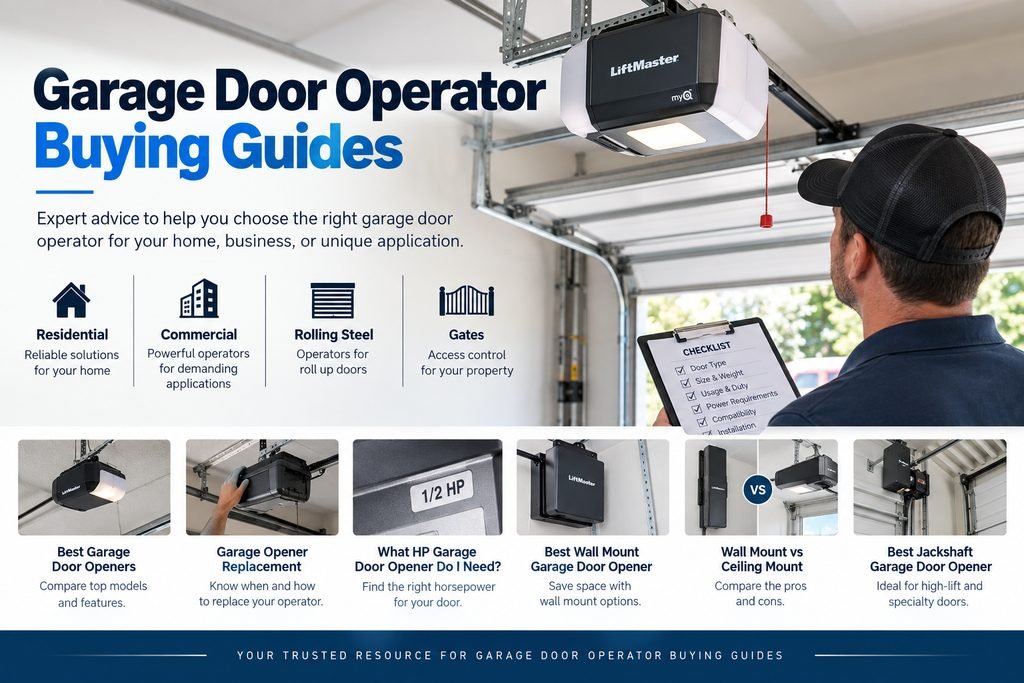
Learn what to consider when choosing a garage door operator for your residential, commercial, rolling steel, or gate application.
Using these garage door operator buying guides starts with understanding your door, application, operating requirements, and installation conditions. The correct operator should be appropriate for the type of door and the environment in which it will be used.
Use these garage door operator buying guides to organize the information you need before comparing garage door operators. Always review the manufacturer’s specifications and installation requirements for the exact operator you are considering.
WHAT TO CONSIDER BEFORE BUYING
DOOR TYPE
Start by identifying the type of door the operator will control. Different door systems can require different operator configurations.
APPLICATION TYPE
Determine whether the operator is intended for a residential garage, commercial door, rolling steel door, gate, or another supported application.
DOOR SIZE & WEIGHT
Door dimensions and weight are important when determining whether an operator is suitable for a particular installation.
USAGE & DUTY
Consider how frequently the door will operate. Residential and commercial applications can have very different operating demands.
POWER & INSTALLATION
Review the available power and installation requirements to make sure the operator is appropriate for the intended location.
BRAND & COMPATIBILITY
If replacing an existing operator or component, verify the manufacturer, model, and compatibility information before purchasing.
CHOOSE THE RIGHT OPERATOR TYPE
These garage door operator buying guides cover different applications. Begin your search by identifying which type of operator best matches your door and intended use.
COMMERCIAL DOOR OPERATORS
Designed for commercial and industrial garage door applications. Review the operator’s specifications, duty requirements, and installation conditions before purchasing.
RESIDENTIAL GARAGE DOOR OPERATORS
Designed for residential garage door applications. Make sure the selected operator is appropriate for the door and installation requirements.
ROLLING STEEL DOOR OPERATORS
Operator solutions for rolling steel doors and commercial applications. Confirm door type, operating requirements, and manufacturer specifications.
GATE & FENCE OPERATORS
Automatic operator solutions for supported gate and controlled-access applications. Verify the operator’s intended application before ordering.
REPLACING AN EXISTING OPERATOR?
Replacing an existing garage door operator requires more than simply matching the appearance of the old unit. Before ordering, collect the information available from the existing installation.
Record the existing operator model number whenever available.
Identify the manufacturer of the existing operator.
Identify the door type and gather its relevant dimensions and specifications.
Determine how and where the door is used and how frequently it operates.
QUESTIONS TO ASK BEFORE YOU ORDER
What type of garage door or gate will the operator control?
Is the application residential, commercial, industrial, or controlled access?
What are the door’s dimensions and available weight information?
How frequently will the operator be used?
What power and installation requirements apply to the location?
Does the selected operator meet the manufacturer’s compatibility and installation requirements?
BEFORE YOU ORDER
VERIFY THE DETAILS
Carefully review the product information, specifications, application information, compatibility details, and installation requirements for the exact operator you intend to purchase.
CHECK THE MANUAL
When available, review the manufacturer’s installation and operating documentation before beginning an installation or replacement.
CONFIRM COMPATIBILITY
Do not assume that two operators or replacement parts are compatible simply because they look similar. Confirm compatibility using reliable manufacturer or product information.
GARAGE DOOR OPERATOR BUYING GUIDES
These garage door operator buying guides are designed to help you organize the information needed before selecting an operator. Instead of starting with a brand or model number, begin with the door, application, operating conditions, and installation requirements. That approach makes it easier to compare suitable equipment without assuming that every operator will work with every door.
The most useful garage door operator buying guides should answer practical questions: What type of door is being operated? How large and heavy is it? How often will it cycle? What power is available? Where will the operator be mounted? Does the replacement need to work with existing controls or accessories? Manufacturer documentation should be used to confirm the final selection.


HOW TO USE THESE BUYING GUIDES
Start by identifying the application. A residential garage, commercial sectional door, rolling steel door, and automatic gate can have very different operator requirements. Once the application is known, gather the door information and operating conditions that the manufacturer uses to determine suitable equipment.
IDENTIFY THE APPLICATION
Establish whether the system is residential, commercial, rolling steel, or gate and fence. The application determines which operator families should be considered first.
DOCUMENT THE DOOR
Record the door type, dimensions, approximate weight when available, lift arrangement, mounting conditions, and any information shown on the existing operator or door documentation.
CHECK THE USAGE
Consider how frequently the door operates and whether the application has higher cycle or duty requirements. Commercial applications can require different equipment from a typical residential installation.
VERIFY THE INSTALLATION
Confirm mounting space, electrical requirements, available clearance, controls, safety equipment, and other conditions listed in the operator’s documentation before ordering.
EXPLORE THE BUYING TOPICS
The garage door operator buying guides on this site can be used as a starting point for more specific research. Each topic addresses a different part of the selection process, so choose the guide that matches the question you need to answer.
BEST GARAGE DOOR OPENERS
Review the factors that matter when comparing garage door openers, including application, features, installation conditions, and compatibility. Do not select an operator from a list alone; verify the specifications for the actual door.
GARAGE OPENER REPLACEMENT
When replacing an existing unit, document the old model, brand, door configuration, controls, power requirements, and installation arrangement before choosing replacement equipment.
HORSEPOWER REQUIREMENTS
Horsepower should not be considered in isolation. Door type, size, weight, balance, usage, and manufacturer requirements all matter when determining the appropriate operator.
WALL MOUNT OPENERS
Wall-mount and jackshaft-style systems can use a different mounting arrangement from traditional ceiling-mounted operators. Review the available side-room and shaft conditions before selecting this type.
WALL MOUNT VS CEILING MOUNT
Compare the mounting location, available space, door configuration, service access, and manufacturer requirements rather than choosing a configuration based only on appearance.
JACKSHAFT OPERATOR SELECTION
Jackshaft-style operators are mounted beside the door rather than using a conventional overhead trolley arrangement. Confirm that the door, shaft, side-room, and operator specifications support the configuration.
SUPPORTING GARAGE DOOR OPERATOR BUYING GUIDES
These supporting garage door operator buying guides take you deeper into the specific questions that commonly come up before choosing, replacing, or comparing an operator. Use the guide that matches your project, then return to this pillar page for the broader selection framework.
BEST GARAGE DOOR OPENERS
Compare the factors that matter when evaluating garage door openers, including door requirements, operator type, features, installation conditions, and compatibility.
GARAGE OPENER REPLACEMENT
Learn what information to collect before replacing an existing garage opener, including model details, door configuration, mounting conditions, controls, and compatibility requirements.
WHAT HP GARAGE DOOR OPENER DO I NEED?
Understand how horsepower fits into operator selection and why door condition, size, weight, usage, and manufacturer requirements should also be considered.
BEST WALL MOUNT GARAGE DOOR OPENER
Review wall-mount operator selection factors such as side-room, shaft configuration, mounting requirements, door compatibility, and available installation space.
WALL MOUNT GARAGE DOOR OPENER VS CEILING MOUNT
Compare wall-mount and ceiling-mount configurations by looking at mounting location, available space, door arrangement, service access, and manufacturer requirements.
BEST JACKSHAFT GARAGE DOOR OPENER
Explore the considerations involved in evaluating jackshaft-style operators, including side-mounted installation, shaft compatibility, available space, and application requirements.
VERIFY WITH MANUFACTURER RESOURCES
These garage door operator buying guides can help you identify the information to compare, but the final selection should be checked against the manufacturer’s documentation. The supporting garage door operator buying guides above can then be used to examine each selection question in more detail. LiftMaster’s official buyer resources explain that door type, size, weight, usage, and installation considerations can affect operator selection. Their safety resources also provide guidance on safety requirements and professional installation.
Review the official LiftMaster Garage Door Opener Buyer’s Guide when evaluating residential opener types and selection considerations.
For commercial applications, review the LiftMaster Commercial Door Operators Buyer’s Guide, which explains that door style, size, weight, and expected cycles are relevant when selecting commercial equipment.
For safety information, consult the official LiftMaster safety and UL 325 resources. Manufacturer instructions should take precedence over generic advice when using garage door operator buying guides for an actual purchase or installation.
GARAGE DOOR OPERATOR BUYING GUIDES FAQ
What should I check before buying a garage door operator? When using garage door operator buying guides, check the door type, dimensions, weight when available, usage, mounting arrangement, available power, controls, safety requirements, and manufacturer compatibility information.
How do I choose between residential and commercial equipment? Start with the actual application and expected usage. Commercial equipment is designed around different operating conditions and duty requirements than typical residential equipment.
Is horsepower the only factor when selecting an operator? No. Horsepower is only one consideration. Door condition, size, weight, balance, usage, operator design, and manufacturer requirements should also be evaluated.
Can I replace my old operator with any new model? No. The replacement must be appropriate for the door and installation. Verify the model, application, mounting, power, controls, safety equipment, and manufacturer’s compatibility information.
Are wall-mount operators suitable for every garage? No. Wall-mount and jackshaft-style operators have specific installation requirements. Confirm shaft, side-room, door, and mounting conditions before ordering.
Should I read the operator manual before installation? Yes. The exact manufacturer’s installation and safety instructions should be reviewed before installation or replacement work begins.
OPERATOR BUYING SAFETY
Garage door systems can contain heavy moving components, electrical equipment, springs, cables, and other potentially hazardous parts. Follow the manufacturer’s safety instructions and installation requirements.
If you are unsure about installation, electrical work, mechanical adjustments, or the condition of the door system, use a qualified professional.
READY TO FIND THE RIGHT OPERATOR?
Explore our garage door operators by application, or contact Garage Door Operator Direct if you need help identifying the right solution for your installation.