Uncategorized
Best Garage Door Openers
Sep
Best Garage Door Openers: 7 Reliable Buying Tips
Finding the best garage door openers starts with understanding your garage door, installation space, operating requirements, and the features you actually need. The right opener is not necessarily the most expensive model or the one with the highest power rating. It should be properly matched to the door and the way the system will be used.
In this guide, we explain how to compare garage door opener types, drive systems, mounting arrangements, horsepower requirements, smart features, and compatibility. If you are still researching your options, our Garage Door Operator Buying Guides provide additional information to help you choose the right operator for your application.

What Makes the Best Garage Door Openers?
The best garage door openers are the ones that properly match the garage door and the installation environment. A suitable opener should provide the required lifting capability, work with the door configuration, fit the available installation space, and provide the features needed for everyday operation.
Several factors should be considered before purchasing an opener. These include door type, door size, door weight, operating frequency, drive type, mounting arrangement, controls, smart features, and compatibility.
It is also important to distinguish between residential and commercial applications. A garage door used a few times each day may have different requirements from a door operated frequently in a commercial environment.
Rather than selecting an opener based on one specification, compare the entire system. This approach makes it easier to identify the best garage door openers for your particular installation.
7 Factors to Consider When Choosing the Best Garage Door Openers
1. Identify Your Garage Door Type
Start by identifying the type and configuration of your garage door. Residential sectional garage doors can have different dimensions, construction, and installation requirements. The opener must be suitable for the movement and configuration of the door.
Before choosing from the best garage door openers, make sure the garage door itself operates properly. An opener is designed to automate a functioning door. It should not be expected to compensate for a door that binds, is damaged, or has another mechanical problem.
2. Consider Door Size and Weight
Door size and weight are important when selecting an opener. The required power should be determined using the manufacturer’s specifications and the actual characteristics of the door rather than simply choosing the largest horsepower rating available.
If you are unsure about the appropriate horsepower, read our guide on what HP garage door opener you need.
Understanding the door requirements first makes it much easier to narrow down the best garage door openers for the installation.
3. Compare Drive Types
Drive type is another major consideration. Common garage door opener configurations include belt drive, chain drive, screw drive, and wall-mounted systems. Each configuration has different characteristics and installation considerations.
Belt-drive systems are often considered when quiet operation is important. Chain-drive systems are another common configuration and may be appropriate for applications where the characteristics of a chain-driven system fit the installation.
Genie currently lists belt-drive, chain-drive, screw-drive, and wall-mount garage door opener categories in its official product information. You can review the official Genie garage door opener resources for additional manufacturer information.
When comparing the best garage door openers, look at the complete drive system instead of choosing an opener based on the drive name alone.
4. Check the Mounting Arrangement
Traditional ceiling-mounted garage door openers are common in residential installations. However, wall-mounted and jackshaft-style operators can be useful when ceiling space, storage, lighting, or the garage layout makes a conventional installation less desirable.
If you are considering a wall-mounted system, read our best wall mount garage door opener guide for more information.
You can also compare the two common installation arrangements in our guide to wall mount garage door opener vs ceiling mount.
Choosing the correct mounting arrangement can make a major difference when determining which of the best garage door openers will actually work for your garage layout.
5. Consider How Frequently the Door Is Used
Think about how many times the garage door is opened and closed during a normal day. A residential garage that is used occasionally can have different requirements from a garage that is opened repeatedly throughout the day.
Frequent-use applications require closer attention to the operator’s intended duty and application. Always review the manufacturer’s specifications to make sure the selected opener is appropriate for the expected use.
Usage frequency is therefore an important part of choosing the best garage door openers, especially when comparing equipment for different applications.
6. Consider Remote and Smart Features
Modern garage door openers can include remote controls, wireless keypads, wall controls, lighting, battery backup, and smart-home connectivity. These features can make everyday garage access more convenient.
Smart features should not replace compatibility checks. First make sure the opener is suitable for the door and installation. After that, decide which convenience features are useful for your household.
LiftMaster’s current residential opener information includes features such as smartphone control, LED lighting, battery backup, and other opener options. You can review the official LiftMaster residential garage door opener resources for manufacturer information.
For many homeowners, the best garage door openers combine appropriate mechanical operation with the controls and features that fit their daily needs.
7. Verify Compatibility Before Ordering
Compatibility should always be checked before purchasing a garage door opener. Confirm the door configuration, installation arrangement, available space, manufacturer requirements, and any other specifications listed for the particular model.
If you are replacing an existing opener, record the brand and model number from the current equipment. Having this information can make it easier to determine what type of replacement system may be appropriate.
Compatibility verification is one of the most important steps when selecting the best garage door openers because not every opener is designed for every door or installation.
Garage Door Opener Types to Compare
Understanding the main garage door opener types can make the buying process much easier. The best garage door openers for one garage may not be appropriate for another because installation requirements and user priorities can be different.
| Opener Type | Common Consideration | What to Check |
|---|---|---|
| Ceiling Mount | Common residential configuration | Ceiling clearance, rail arrangement, door configuration |
| Belt Drive | Often considered for quieter operation | Door requirements and manufacturer specifications |
| Chain Drive | Traditional drive configuration | Application and operating requirements |
| Screw Drive | Another available residential configuration | Model specifications and installation requirements |
| Wall Mount | Useful where ceiling space is important | Side-room, shaft position, door configuration |
| Jackshaft | Side-mounted operator arrangement | Door shaft, mounting location, compatibility |
There is no universal answer when comparing the best garage door openers. The correct configuration depends on the garage door, installation environment, operating frequency, and desired features.
Best Garage Door Openers for Different Applications
Standard Residential Garage
A typical residential garage may use a conventional ceiling-mounted opener when there is sufficient overhead clearance and the door configuration supports that arrangement.
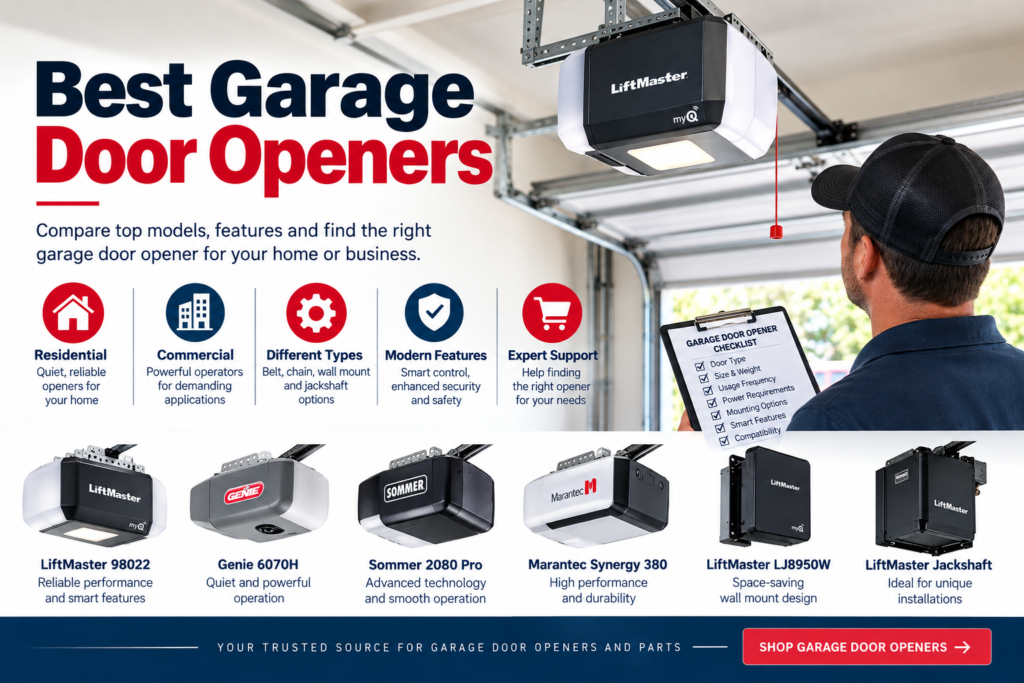
One example available from Garage Door Operator Direct is the LiftMaster 98022 Garage Door Opener. Review the product information and manufacturer’s requirements before ordering.
The right residential system should be selected based on the actual door and installation rather than simply choosing whichever model appears first in a list of the best garage door openers.
Garage With Limited Ceiling Space
A wall-mounted opener can be worth considering when you want to keep the ceiling area clear. This type of arrangement can be useful when overhead storage or other equipment affects the available ceiling space.
The LiftMaster LJ8950W is an example of a wall-mounted residential operator available from Garage Door Operator Direct.
Always verify the actual door and installation requirements before choosing a wall-mounted system. This is especially important when comparing the best garage door openers for garages with unusual layouts.
Jackshaft-Style Installation
Jackshaft-style operators use a side-mounted configuration rather than the traditional overhead powerhead and rail arrangement. This can be useful for certain garage layouts where preserving ceiling space is a priority.
Garage Door Operator Direct also lists a LiftMaster Residential Jackshaft Operator. Confirm the door and installation requirements before selecting this type of operator.
Genie Residential Option
The Genie 6070H is another residential opener listed by Garage Door Operator Direct. Product selection should be based on the actual installation requirements rather than a general assumption that one model is suitable for every garage.
Garage Door Opener Comparison: What Should You Compare?
A useful garage door opener comparison should look at more than price. Compare the drive configuration, mounting arrangement, application, installation requirements, controls, and manufacturer documentation.
| Factor | Why It Matters |
|---|---|
| Door Type | Determines whether the opener is appropriate for the door configuration. |
| Door Size and Weight | Helps determine the required opener specifications. |
| Drive Type | Affects the operating configuration and characteristics. |
| Mounting Type | Must match available ceiling, wall, and shaft space. |
| Usage | Frequent operation may require equipment designed for the application. |
| Features | Determines available convenience and control options. |
| Compatibility | Helps prevent ordering an opener that does not suit the installation. |
Brand and Manufacturer Information
Manufacturer documentation should be part of the buying process. Official product information can help you understand the available opener types, features, installation arrangements, and compatibility requirements.
LiftMaster provides official information covering residential garage door openers, including different opener series and available features. Review the official LiftMaster garage door opener information when researching a LiftMaster system.
Genie also provides an official product selector and information covering belt-drive, chain-drive, screw-drive, and wall-mount garage door openers. Reviewing manufacturer resources is useful when narrowing down the best garage door openers for a specific application.
Choosing an Opener for Replacement
Replacing an existing garage door opener requires a slightly different approach from choosing an opener for a new installation. Start by recording the existing opener’s brand and model number.
Also identify the door configuration, mounting arrangement, available space, and any features you want to keep or add.
Our detailed garage opener replacement guide provides additional information about evaluating an existing operator.
If the existing system has stopped working, determine whether the problem is actually with the opener. Door springs, tracks, sensors, wiring, and other components can also affect garage door operation.
Proper identification of the existing system can help you avoid ordering the wrong equipment when looking for the best garage door openers for a replacement project.
Common Garage Door Opener Buying Mistakes
Choosing Only by Horsepower
Horsepower is only one consideration. The door configuration, size, weight, operating frequency, and manufacturer’s requirements should all be considered before selecting an opener.
Ignoring the Condition of the Door
A new opener will not correct a damaged or improperly balanced garage door. The door should be evaluated separately to make sure it operates properly before installing an opener.
Ignoring Available Installation Space
Measure the garage before ordering. Ceiling height, side-room, shaft position, storage, lighting, and other equipment can influence which opener configuration is appropriate.
Assuming Every Opener Is Universal
Garage door openers should not automatically be considered interchangeable. Review the manufacturer’s documentation and verify the specific installation requirements before purchasing.
Buying Only Because of Price
Price can help establish a budget, but it should not be the only selection factor. The best garage door openers for an individual installation should be evaluated according to suitability, required features, application, and compatibility.
Questions to Ask Before Ordering
- What type of garage door will the opener operate?
- What are the approximate dimensions of the door?
- What is the expected operating frequency?
- How much ceiling space is available?
- How much side-room is available?
- Do I need a ceiling-mounted, wall-mounted, or jackshaft configuration?
- Do I need remote, keypad, wall-control, or smart features?
- What is the brand and model of the existing opener?
- Have I checked the manufacturer’s compatibility information?
Garage Door Opener Buying Checklist
Before ordering one of the best garage door openers for your garage, work through this checklist:
- Identify the door: Determine the door type and configuration.
- Check the door condition: Make sure the door operates correctly.
- Measure the installation area: Check ceiling clearance and available side-room.
- Determine usage: Consider how often the door will be opened and closed.
- Compare mounting options: Consider ceiling-mounted, wall-mounted, and jackshaft configurations where applicable.
- Compare drive systems: Review belt, chain, screw, or other applicable configurations.
- Review features: Decide which controls, lighting, connectivity, or backup features are actually needed.
- Verify compatibility: Review the manufacturer’s documentation before ordering.
- Review installation requirements: Make sure the selected opener is appropriate for the installation environment.
How to Choose the Best Garage Door Openers
A practical selection process starts with the garage door rather than the opener itself. First identify the door type and condition. Next, determine the approximate size and weight, expected usage, and available installation space.
After establishing those requirements, compare the available drive and mounting configurations. Then consider convenience features such as remotes, keypads, smart connectivity, lighting, and battery backup where applicable.
This process makes it easier to compare the best garage door openers based on actual requirements instead of relying on advertising claims or a single specification.
Final Thoughts
There is no single garage door opener that is automatically right for every garage. The correct choice depends on the door, available installation space, operating frequency, mounting requirements, desired features, and compatibility.
The best garage door openers for your application are the models that meet the requirements of your garage door and installation environment while providing the features you actually need.
Before placing an order, verify the exact model information and review the manufacturer’s documentation. If you are still comparing options, return to our Garage Door Operator Buying Guides for additional buying information.
Frequently Asked Questions About the Best Garage Door Openers
What should I look for in the best garage door openers?
Look at the door type, door dimensions, weight, operating frequency, installation space, drive configuration, mounting arrangement, controls, smart features, and manufacturer compatibility requirements.
Are belt-drive garage door openers better than chain-drive models?
Belt-drive and chain-drive systems have different characteristics. The appropriate choice depends on the garage door, installation environment, operating requirements, and your priorities.
What horsepower garage door opener do I need?
The required power depends on the door and the manufacturer’s specifications. Horsepower should not be the only factor used to select an opener.
Are wall-mounted garage door openers a good option?
Wall-mounted systems can be useful for certain garage layouts, particularly when preserving ceiling space is important. The installation must meet the requirements of the selected operator.
What is a jackshaft garage door opener?
A jackshaft-style opener is installed beside the garage door rather than using the conventional overhead powerhead arrangement. This can be useful for certain installations where ceiling space is limited or where a side-mounted configuration is preferred.
Can I replace my existing garage door opener with any new model?
No. The replacement should be checked for compatibility with the garage door and installation. Review the existing model information and the manufacturer’s specifications before ordering.
Should I choose a garage door opener with smart features?
Smart features can be useful for homeowners who want compatible remote monitoring and control. However, compatibility and application requirements should be checked first.
How do I compare the best garage door openers?
Compare the door requirements, mounting arrangement, drive configuration, operating frequency, installation space, available features, and manufacturer specifications. The right choice depends on the application rather than one universal ranking.
What information should I have before ordering?
Have the garage door type, approximate dimensions, existing opener brand and model if applicable, available installation space, expected usage, and preferred features ready. This information makes compatibility checks easier.
Ready to Find the Right Garage Door Opener?
Compare your garage door requirements, installation space, operating needs, and desired features before ordering. Taking these steps can help you identify an opener that is appropriate for your particular application.

