
Uncategorized
How to Install a Roll Up Garage Door
Sep
How to Install a Roll Up Garage Door: Complete Step-by-Step Guide
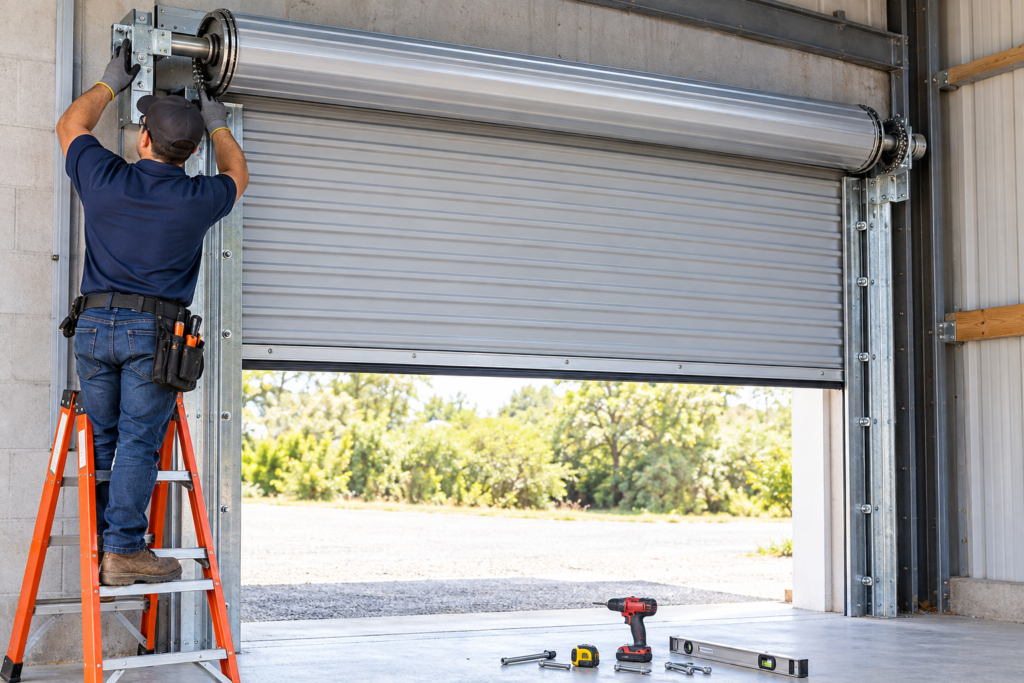
How to Install a Roll Up Garage Door starts with understanding the opening, the door assembly, the available clearance, and the manufacturer’s installation requirements. A roll-up garage door may look relatively simple when it is closed, but the complete system contains several components that must be positioned and secured correctly.
This guide explains How to Install a Roll Up Garage Door from the planning stage through measurement, preparation, guide installation, mounting, alignment, testing, and operator selection. Because roll-up doors differ by manufacturer and model, the instructions supplied with the specific door should always be treated as the primary installation reference.
The purpose of this article is to provide practical educational information so you can understand the installation process before beginning work. Heavy door assemblies, specialized lifting equipment, and spring or counterbalance components can introduce hazards, so certain installations may require qualified professional assistance.

What to Know Before Installing a Roll-Up Garage Door
How to Install a Roll Up Garage Door should not begin with immediately lifting the door into the opening. The first stage is identifying the exact door model and understanding how that particular system is designed to be mounted.
Roll-up doors can differ in curtain construction, guide design, mounting brackets, barrel arrangement, counterbalance method, bottom bar design, and operating equipment. For this reason, avoid assuming that a procedure used for one roll-up door will automatically apply to another.
If the door is replacing an existing system, inspect the old opening before removing everything. Existing framing may have deterioration, previous modifications, damaged mounting surfaces, or dimensions that do not match the new door.
A successful installation also requires a suitable work area. Remove unnecessary objects from around the opening and make sure there is enough room for the people handling the door components.
Planning the Installation
Good planning makes How to Install a Roll Up Garage Door much easier because it allows problems to be identified before heavy components are positioned.
Begin by reviewing the manufacturer’s installation instructions. Locate the dimensional drawings, mounting requirements, hardware specifications, and any instructions concerning the counterbalance system.
Confirm the Door Model
Record the manufacturer’s name and model number. This information can be important when checking the correct brackets, guides, fasteners, replacement parts, and operator compatibility.
Inspect the Structural Area
Look at the header, jambs, walls, floor, and other surfaces that will support the door. A roll-up door should not be attached to an unsuitable surface simply because it is convenient.
Plan the Installation Sequence
How to Install a Roll Up Garage Door becomes more manageable when the components are organized in the order they will be used. Separate fasteners and hardware according to the manufacturer’s instructions rather than mixing everything together.
Measure the Garage Door Opening
Accurate measurements are one of the foundations of How to Install a Roll Up Garage Door. Measure the opening before ordering or mounting the door and compare your measurements with the manufacturer’s required dimensions.
| Area | What to Check |
|---|---|
| Opening width | Measure the usable width of the finished opening. |
| Opening height | Measure from the finished floor to the top of the opening. |
| Left side room | Confirm sufficient space for the guide and mounting hardware. |
| Right side room | Verify the opposite guide has adequate mounting space. |
| Headroom | Check the space needed for the rolled curtain and hardware. |
| Floor | Check whether the closing surface is level and suitable. |
Take More Than One Measurement
Do not rely on one measurement at one point of the opening. Check the width at multiple locations and compare the results. Older structures can have openings that are not perfectly square.
How to Install a Roll Up Garage Door correctly requires the installer to recognize dimensional problems before the door is permanently secured. If the opening does not meet the manufacturer’s requirements, resolve the issue before proceeding.
Check Headroom, Side Room, and Interior Clearance
Clearance is another important part of How to Install a Roll Up Garage Door. The curtain needs adequate space to travel through the guides and roll into its open position.
Headroom
Inspect the area above the opening for beams, lighting equipment, shelving, wiring, ductwork, and other obstacles. The required headroom varies by door design.
Side Room
Both sides of the opening should be checked. The guides and their mounting hardware need appropriate space and structural support.
Interior Space
The barrel, shaft, brackets, or operator may occupy space inside the building. Check the manufacturer’s dimensional requirements before positioning these components.
If an automatic operator will be installed, account for its mounting location during the planning stage. This prevents the finished door from interfering with nearby equipment.
Tools and Equipment for the Job
The exact equipment needed for How to Install a Roll Up Garage Door depends on the specific model and building construction.
- Tape measure
- Level
- Plumb line
- Drill
- Appropriate drill bits
- Socket set
- Wrench set
- Screwdrivers
- Clamps where specified
- Suitable ladders or approved access equipment
- Appropriate lifting equipment for heavy components
- Personal protective equipment
Use fasteners appropriate for the actual mounting surface. A fastener suitable for one material may not be appropriate for another.
Keep the work area organized. Hardware that looks similar can have different purposes, so separating components before assembly can reduce mistakes.
Understanding the Main Roll-Up Door Components
Understanding the components makes How to Install a Roll Up Garage Door easier to follow. While designs differ, many systems contain a curtain, guides, bottom bar, barrel or shaft, brackets, counterbalance components, and mounting hardware.
For a visual explanation of common components, see our Roll Up Door Parts Diagram .
Curtain
The curtain is the moving portion of the door. It travels vertically through the guides and rolls around the upper assembly when the door opens.
Guides
The side guides keep the curtain traveling along the intended path. Their alignment is important for smooth movement.
Bottom Bar
The bottom bar forms the lower edge of the curtain and travels with the door during opening and closing.
Barrel or Shaft
The upper barrel or shaft supports the curtain as it rolls upward. Its brackets and mounting points must be installed according to the door manufacturer’s instructions.
How to Install a Roll Up Garage Door is therefore not simply a matter of attaching a curtain to a wall. Every major component has a role in keeping the door properly supported and aligned.
Installing and Aligning the Side Guides
Guide installation is one of the most important stages in How to Install a Roll Up Garage Door. The guides need to be positioned according to the manufacturer’s required dimensions.
Check Vertical Alignment
Use a suitable level or other measuring method to verify the guides are correctly positioned. A guide that leans or shifts from its required position can affect curtain movement.
Verify Guide Spacing
Measure the distance between the guides and compare it with the manufacturer’s specifications. Do not estimate this distance visually.
Inspect the Mounting Surface
The guides must be secured to a suitable structural surface. If the surrounding material is damaged, deteriorated, or inadequate, repair it before continuing.
During How to Install a Roll Up Garage Door, do not force the curtain into guides that appear incorrectly positioned. Recheck the measurements and mounting points instead.
Positioning the Roll-Up Door Assembly
The assembly stage of How to Install a Roll Up Garage Door requires particular attention because some components can be heavy and difficult to control.
Large assemblies should be handled with enough people and appropriate lifting equipment. Never leave a heavy component temporarily balanced while another task is being performed.
Protect Finished Surfaces
Avoid dragging the curtain across abrasive surfaces. Protect finished components from unnecessary scratches, dents, and impacts during handling.
Position the Upper Assembly
Install the barrel, shaft, brackets, or related components in the configuration specified for the particular door. The exact arrangement depends on the product.
Keep the Assembly Supported
Support heavy components until the specified mounting hardware has been installed and secured. Do not rely on friction or temporary positioning as a permanent support method.
Secure the Mounting Hardware
Secure mounting is essential to How to Install a Roll Up Garage Door. Use the manufacturer’s specified hardware and follow the recommended attachment locations.
The supporting structure should be capable of carrying the loads associated with the installed door. If the existing structure is questionable, resolve that issue before installing the door.
Tighten the Hardware Correctly
Follow the manufacturer’s instructions for tightening. Avoid using excessive force on components that have specific torque requirements.
Recheck the Guides
After tightening the mounting hardware, check the guide alignment again. Tightening can sometimes shift components slightly.
Inspect the Complete Installation
Before moving the door, visually inspect the mounting points and make sure required hardware has been installed. How to Install a Roll Up Garage Door should always include a final hardware inspection before testing.
Counterbalance and Spring Safety
Counterbalance components require special attention during How to Install a Roll Up Garage Door. Some systems use springs or other components that can store mechanical energy.
Never improvise a spring-winding, spring-unwinding, or tension-adjustment procedure. Follow the exact instructions supplied for the specific door.
If you do not have the required tools, training, or experience to work safely with stored-energy components, qualified professional assistance should be considered.
For general workplace safety information, the Occupational Safety and Health Administration provides educational safety resources.
Safety information should be considered throughout How to Install a Roll Up Garage Door, not only after the physical installation has been completed.
Test the Door Before Installing Automation
Testing is a necessary stage of How to Install a Roll Up Garage Door. Once the door has been mounted, inspect its movement according to the manufacturer’s instructions.
Watch for Binding
Look for scraping, catching, uneven movement, or other unexpected resistance. A properly installed door should move according to the characteristics specified by its manufacturer.
Check the Closing Position
Verify that the bottom bar reaches the intended closing position without striking an obstruction.
Inspect the Curtain
Look along the curtain for damage or unusual movement. If something does not appear correct, stop and investigate before connecting an automatic operator.
Do not use an operator to compensate for a door that is incorrectly installed or difficult to move. How to Install a Roll Up Garage Door should result in a door assembly that has been checked before automation is added.
Choosing a Compatible Roll-Up Door Operator
The next consideration after How to Install a Roll Up Garage Door is selecting an operator that is appropriate for the completed door.
Operator selection can depend on door dimensions, door weight, construction, operating frequency, mounting configuration, and application. Always compare the actual door specifications with the operator’s requirements.
For commercial applications, operator selection can be especially important because different doors and operating conditions require different operator configurations.
The official LiftMaster Commercial Door Operator Buyer’s Guide explains that factors such as door type, size, weight, and cycle requirements affect operator selection.
For the complete product category on Garage Door Operator Direct, visit: Roll Up Garage Door Opener .
Related Roll-Up Garage Door Operator Products
After learning How to Install a Roll Up Garage Door, you can review compatible roll-up operator products based on the specific door application.
Automatic Technology 86341 ShedMaster
The Automatic Technology 86341 ShedMaster can be reviewed when considering operator equipment for an appropriate rolling-door application. Confirm compatibility before ordering.
Automatic Technology 87840 EasyRoller14
Another product to investigate is the Automatic Technology 87840 EasyRoller14 . Check the product requirements against the actual door before installation.
ATA Hiro Operator
The ATA Hiro Operator is another operator option within the roll-up door product cluster.
LiftMaster LJ8950W
The LiftMaster LJ8950W can also be evaluated for a suitable application. Verify the exact door and operator requirements before purchasing.
Related Rolling Steel Door Resources
The installation process is only one part of maintaining a complete rolling-door system. These related articles address different search intents within the same topical cluster.
- Rolling Steel Door Installation
- How to Seal a Roll Up Door
- Roll Up Door Parts Diagram
- Roll Up Door Chain Hoist
- Roll Up Door Parts
- Commercial Roll Up Door Parts
Frequently Asked Questions About Roll-Up Garage Door Installation
What is the first step in installing a roll-up garage door?
The first step in How to Install a Roll Up Garage Door is to identify the exact door model and review its manufacturer’s installation requirements. The opening and supporting structure should then be inspected and measured.
How should I measure a roll-up garage door opening?
Measure the opening width and height and check both side clearances and available headroom. Compare the measurements with the exact requirements supplied for the door.
Why do roll-up door guides need to be aligned?
The guides control the path of the curtain. Incorrect alignment can contribute to rubbing, binding, uneven movement, or other installation problems.
Can a roll-up garage door be installed by one person?
That depends on the door’s size, weight, design, and manufacturer’s handling requirements. Larger assemblies may require multiple installers or appropriate lifting equipment.
Should I install the operator before testing the door?
The door should be correctly installed and checked before relying on an automatic operator. An operator should not be used to overcome problems with the physical door installation.
What happens if the roll-up door does not move smoothly?
Stop and inspect the installation. Check for guide alignment, obstructions, mounting problems, or other issues identified in the manufacturer’s instructions instead of forcing the door.
Are roll-up garage doors all installed the same way?
No. Installation methods differ according to the manufacturer, model, curtain construction, guide system, mounting arrangement, counterbalance design, and intended application.
Do roll-up garage doors require special safety precautions?
Yes. Heavy components and counterbalance or spring systems can create hazards. Follow the manufacturer’s safety procedures and obtain professional assistance when specialized work is required.
How do I choose an operator after installing the door?
Choose an operator based on the door’s dimensions, weight, construction, operating frequency, mounting arrangement, and the operator manufacturer’s compatibility requirements.
Where can I find roll-up garage door operators?
You can browse the Roll Up Garage Door Opener category to review the available products and then compare each product’s requirements with your door.
Final Installation Checklist
Before considering How to Install a Roll Up Garage Door complete, review the entire installation rather than checking only the most visible components.
- Confirm the correct door model.
- Verify the opening measurements.
- Check the supporting structure.
- Confirm headroom and side clearance.
- Install the guides according to the manufacturer’s dimensions.
- Secure the upper assembly correctly.
- Inspect all required mounting hardware.
- Follow all counterbalance and spring safety instructions.
- Check the curtain for damage.
- Test door movement before automation.
- Confirm the bottom bar reaches its intended position.
- Verify operator compatibility before installation.
How to Install a Roll Up Garage Door is ultimately a process of combining accurate preparation with careful mechanical installation. The opening must be suitable, the guides must be aligned, the mounting hardware must be secure, and the completed door should be inspected before an operator is added.
If the installation involves heavy components, specialized lifting equipment, or stored spring energy, the safest approach may be to have qualified personnel perform the work. The manufacturer’s instructions remain the final authority for model-specific procedures.
Once the physical door has been installed and checked, continue with the operator-selection stage. The Roll Up Garage Door Opener category provides the appropriate place to review the available operator options.
How to Install a Roll Up Garage Door should therefore be approached as a complete installation process rather than a single mounting task. Proper measurements, suitable structural support, correct alignment, safe handling, and compatible operating equipment all contribute to a properly planned roll-up door system.


Pingback: Rolling Steel Door Installation: Planning, Mounting & Safety
Pingback: Roll Up Door Parts Diagram: 11 Essential Components
Pingback: Roll Up Door Chain Hoist: 7 Essential Facts How It Works
Pingback: 9 Proven Roll Up Door Parts: Complete Component Guide