
Uncategorized
Rolling Steel Door Installation

Sep
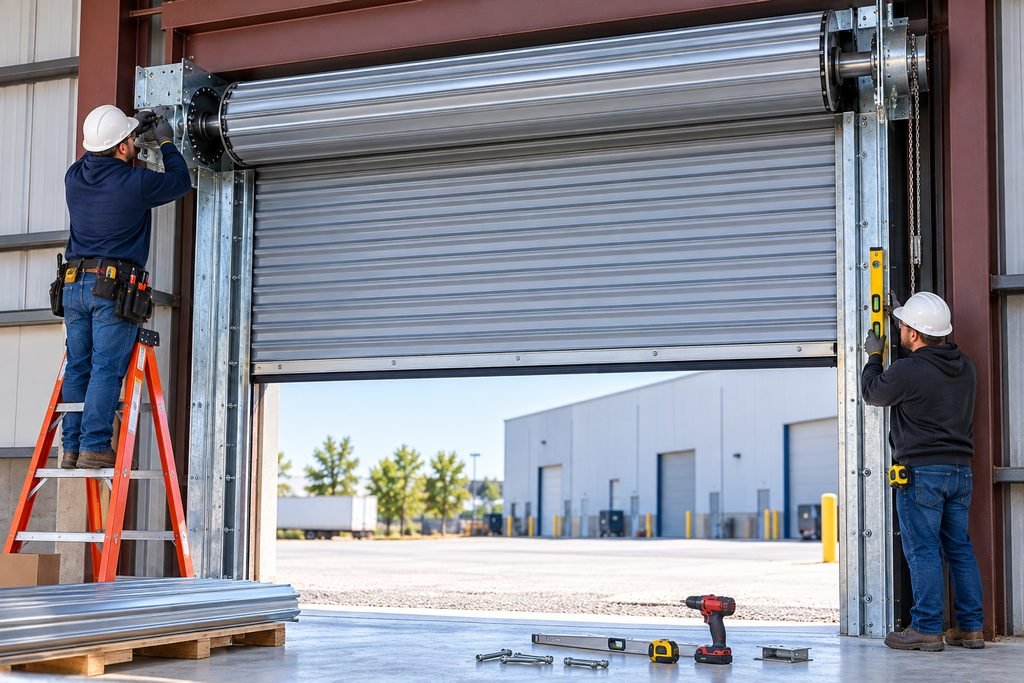
Rolling Steel Door Installation: 9 Essential Steps for a Proper Setup
Rolling Steel Door Installation requires careful planning because the door, guides, mounting brackets, curtain, upper assembly, and operating equipment must work together correctly. A successful installation starts before the first fastener is installed. The opening needs to be measured, the structural surfaces inspected, and the correct door configuration confirmed.
Unlike a basic hinged door, a rolling steel door moves vertically through side guides and wraps around an upper barrel or shaft when opened. That means alignment is especially important. If the guides are incorrectly positioned or the supporting structure is unsuitable, the curtain may not travel smoothly.
This guide explains the major stages of Rolling Steel Door Installation, from preparing the opening and checking dimensions to mounting the guides, positioning the curtain, checking alignment, testing the finished door, and selecting a suitable operator.

Rolling Steel Door Installation Overview
Rolling Steel Door Installation is best viewed as a complete mechanical installation rather than a simple mounting project. The door curtain depends on properly positioned guides, the upper assembly needs adequate structural support, and the finished system must travel through its intended path without unnecessary interference.
The exact procedure depends on the manufacturer, door model, opening dimensions, construction type, mounting arrangement, and operating method. Manufacturer instructions should therefore be treated as the primary installation reference.
The Door and Access Systems Manufacturers Association International (DASMA) specifically notes that rolling steel doors should be installed and serviced by trained door-system technicians and recommends checking existing job conditions before installation begins. This is particularly important when wall conditions or structural surfaces are questionable.
For that reason, Rolling Steel Door Installation should begin with preparation and inspection instead of immediately mounting the hardware.
Preparing the Installation Area
The first stage of Rolling Steel Door Installation is preparing the work area. The opening should be accessible, reasonably clear, and free from unnecessary obstacles that could interfere with the installation.
Remove stored materials and equipment from the immediate work zone. Check the area around the opening for electrical wiring, pipes, ductwork, shelving, lights, structural members, and other objects that could affect the door or mounting hardware.
Inspect the Existing Opening
If the project involves replacing an existing rolling door, inspect the opening before removing the old equipment. Look for cracked masonry, damaged framing, loose fasteners, corrosion, previous modifications, or other conditions that could affect the new installation.
Establish a Controlled Work Zone
Large rolling door components can be heavy and awkward to handle. The installation area should therefore be controlled so that unnecessary personnel are not exposed to the work.
OSHA explains that moving mechanical parts can create workplace hazards and that appropriate safeguarding is important where machinery presents a risk of injury.
This makes safety preparation an important part of Rolling Steel Door Installation, rather than something to consider only after the door has been assembled.
Taking Accurate Door Opening Measurements
Accurate measurements provide the foundation for Rolling Steel Door Installation. The door needs enough space to fit the opening while also providing room for the guides, brackets, barrel, shaft, and other components.
| Measurement | Purpose |
|---|---|
| Opening width | Determines the required door width. |
| Opening height | Determines the vertical travel required. |
| Side clearance | Provides space for guide installation. |
| Headroom | Provides space for the rolled curtain and upper hardware. |
| Mounting depth | Helps determine how brackets and other hardware can be positioned. |
| Floor condition | Affects the door’s final closing position. |
Do not rely on a single measurement. Older buildings can have openings that are not perfectly square, level, or plumb. Measure multiple points and compare the results with the requirements of the specific door.
A dimensional problem should be resolved before permanent mounting rather than hidden by forcing components into position during Rolling Steel Door Installation.
Inspecting Structural Support
The mounting surface is another critical consideration in Rolling Steel Door Installation. Guides and upper components transfer loads into the surrounding structure, so the supporting wall or frame needs to be appropriate for the door system.
Masonry
Inspect masonry surfaces for cracks, deterioration, damaged areas, and previous repairs. Anchoring methods should be appropriate for the actual construction and the manufacturer’s requirements.
Steel Framing
When the door is mounted to steel framing, verify that the attachment arrangement is appropriate for the structure and door configuration. The installer should not assume that any convenient steel member is automatically suitable.
Wood Framing
Wood framing should be inspected at the required mounting points. The presence of wood around an opening does not automatically mean that every location provides adequate support.
DASMA’s guidance on common rolling steel door installation problems emphasizes checking job conditions and addressing unsatisfactory wall conditions before installation begins.
Understanding the Main Door Components
Knowing the major parts makes Rolling Steel Door Installation easier to understand. Although designs differ between manufacturers, many rolling door systems include several common components.
- Steel curtain: the flexible or sectional steel assembly that closes the opening.
- Side guides: channels that control the curtain as it moves vertically.
- Bottom bar: the lower portion of the curtain assembly.
- Barrel or shaft: the upper assembly around which the curtain rolls.
- Brackets: structural mounting components supporting the upper assembly.
- Counterbalance components: parts that assist with the movement of the door.
- Fasteners: hardware used to secure the components to the building structure.
- Operator: powered equipment used to automate the door where applicable.
For a visual explanation of common components, see our Roll Up Door Parts Diagram .
Installing and Aligning the Side Guides
The side guides control the path of the curtain, making guide positioning one of the most important stages of Rolling Steel Door Installation.
Position each guide according to the dimensions and configuration specified for the door. Confirm the spacing between both guides before permanently tightening the mounting hardware.
Check Vertical Position
The guides should be positioned according to the manufacturer’s alignment requirements. Use appropriate measuring equipment rather than relying only on visual judgment.
Confirm Guide Spacing
Measure the distance between the guides at appropriate locations. Uneven spacing can affect the way the curtain travels.
Inspect the Guide Path
Check for obstructions, damaged surfaces, protruding hardware, or anything that could interfere with curtain movement.
Correct guide installation gives the curtain a controlled path and can help prevent unnecessary rubbing or binding after Rolling Steel Door Installation is complete.
Positioning the Steel Curtain
The steel curtain is often one of the largest components handled during Rolling Steel Door Installation. Its size and weight depend on the door design and opening.
Use appropriate lifting and handling equipment when required. Do not assume that a large curtain can safely be handled manually simply because it becomes easier to move once installed.
Protect the Curtain
Avoid dragging the curtain over rough surfaces or striking it against structural components. Scratches, dents, or deformation can affect both appearance and mechanical operation.
Enter the Guides Correctly
The curtain should enter the guides according to the manufacturer’s specified procedure. If the curtain does not align naturally with the guide system, stop and investigate rather than forcing the components together.
Maintain Temporary Support
Temporary supports should remain in place until the permanent mounting arrangement is secure. Do not release lifting equipment simply because the curtain appears to be positioned correctly.
Mounting the Upper Assembly
The upper assembly supports the curtain as it rolls into the open position. Proper mounting is therefore another central part of Rolling Steel Door Installation.
Depending on the door, the upper assembly can include a barrel, shaft, brackets, bearings, counterbalance components, and other hardware.
Use the Specified Configuration
Do not rearrange brackets or substitute components simply because another configuration appears easier. The mounting arrangement should match the door manufacturer’s design.
Secure the Mounting Points
Check the required mounting points on both sides. The upper assembly should be properly supported before temporary lifting equipment or other supports are removed.
Inspect the Hardware
Inspect brackets, fasteners, bearings, and other visible hardware before moving to the testing stage.
Rolling Steel Door Installation Alignment Check
Alignment is one of the most important quality-control stages in Rolling Steel Door Installation. A door can appear properly installed while still having spacing or alignment problems that become obvious during operation.
Inspect the relationship between the curtain and guides. Check whether the curtain travels through the intended path and whether any section appears to rub, catch, scrape, or bind.
Check Both Sides
Do not inspect only the side that is easiest to reach. Both sides of the door need to be evaluated.
Check the Closing Position
Observe how the bottom portion of the door meets the intended closing position. Any unexpected unevenness should be investigated before the door is placed into normal service.
Do Not Use the Operator to Hide a Problem
An automatic operator should not be expected to compensate for an incorrectly installed mechanical door. Correct the physical installation first.
Counterbalance and Spring Considerations
Some rolling steel doors use counterbalance systems or springs that store mechanical energy. These components require particular care during Rolling Steel Door Installation.
Never improvise spring tensioning or adjustment procedures. Follow the exact instructions supplied for the specific door.
If the installation requires specialized equipment, training, or procedures, qualified door-system technicians should handle that work.
OSHA’s machine-guarding resources explain that moving machine parts can create hazards and that appropriate safeguarding is necessary where workers may be exposed to dangerous mechanical movement.
Testing the Completed Door
Testing is an essential part of Rolling Steel Door Installation because it allows mechanical problems to be identified before the door enters normal service.
| Test | What to Check |
|---|---|
| Opening movement | Look for resistance, interference, or unusual movement. |
| Closing movement | Confirm that the door reaches its intended closing position. |
| Guide interaction | Check for rubbing, catching, or abnormal contact. |
| Bottom bar | Confirm that the bottom portion travels correctly. |
| Mounting hardware | Inspect visible brackets and fasteners. |
If the door behaves unexpectedly, stop the test and investigate the cause. Continuing to cycle a mechanically defective door can make the problem more difficult to diagnose.
Selecting a Rolling Door Operator
After the physical door has been installed and checked, the next consideration may be automation. The operator should be selected according to the actual door rather than simply choosing a motor based on appearance or general size.
Important considerations can include door dimensions, weight, operating frequency, mounting arrangement, available power, and manufacturer compatibility requirements.
The main category for this cluster is: Roll Up Garage Door Opener .
Review the specifications of the intended operator and confirm that they correspond with the door application before purchasing.
Related Rolling Door Operator Products
Automatic Technology 86341 ShedMaster
The Automatic Technology 86341 ShedMaster is included in this rolling-door product cluster. Review its specifications and verify suitability for the intended application before ordering.
Automatic Technology 87840 EasyRoller14
Another product to review is the Automatic Technology 87840 EasyRoller14 . Always compare the product specifications with the actual door configuration.
ATA Hiro Operator
You can also review the ATA Hiro Operator when evaluating operator options for a suitable rolling-door application.
LiftMaster LJ8950W
The LiftMaster LJ8950W is another product in this cluster. Verify compatibility and application requirements before selecting an operator.
Related Rolling Steel Door Articles
These related articles cover different questions within the same topical cluster. Each link addresses a separate search intent rather than duplicating the installation information on this page.
- How to Install a Roll Up Garage Door
- How to Seal a Roll Up Door
- Roll Up Door Parts Diagram
- Roll Up Door Chain Hoist
- Roll Up Door Parts
- Commercial Roll Up Door Parts
Rolling Steel Door Installation FAQs
What should be checked before installing a rolling steel door?
Check the door model, opening dimensions, structural support, available clearance, mounting surfaces, required hardware, and the manufacturer’s installation requirements before beginning.
Why is structural support important?
The door’s guides and upper assembly transfer loads into the building structure. Suitable support helps provide a stable mounting arrangement.
Why do the side guides need careful alignment?
The guides control the curtain’s movement. Incorrect positioning can contribute to rubbing, binding, uneven travel, or other operating problems.
Can any fasteners be used?
Fasteners should be appropriate for the building structure and the particular door installation. Follow the manufacturer’s requirements rather than selecting hardware solely on appearance.
Should the door be tested before an operator is installed?
The mechanical door should be checked according to the manufacturer’s instructions before automation is relied upon. An operator should not be used to compensate for mechanical problems.
What can cause a rolling steel door to bind?
Possible causes include incorrect guide positioning, obstructions, damaged components, structural problems, or other installation issues. The exact cause should be identified before continuing operation.
Are rolling door springs dangerous?
Some counterbalance systems store mechanical energy. Spring and counterbalance procedures should follow the manufacturer’s instructions and should be handled by trained personnel when specialized work is required.
How do I choose an operator?
Compare the door’s dimensions, construction, weight, operating requirements, mounting arrangement, and other specifications with the operator manufacturer’s requirements.
Where can I find roll-up door operators?
Visit the Roll Up Garage Door Opener category to review available products.
Rolling Steel Door Installation Final Checklist
Before considering Rolling Steel Door Installation complete, review the following points:
- Confirm the exact door model and configuration.
- Review the manufacturer’s installation documentation.
- Measure the opening width and height.
- Check side clearance and headroom.
- Inspect structural mounting surfaces.
- Confirm the required hardware.
- Install the side guides correctly.
- Check guide alignment and spacing.
- Position the curtain correctly.
- Secure the upper assembly.
- Inspect brackets and fasteners.
- Follow all counterbalance and spring procedures.
- Check the curtain’s travel.
- Inspect for rubbing or binding.
- Test the completed door.
- Confirm operator compatibility before automation.
Rolling Steel Door Installation is a process that depends on preparation, accurate measurement, appropriate structural support, careful component positioning, and final testing. The guides, curtain, upper assembly, counterbalance components, and operator all have to be considered as parts of one system.
Once the physical installation has been checked, the next step is choosing an operator that matches the actual door. Visit the Roll Up Garage Door Opener category to continue evaluating suitable operator options.
For workplace installations, applicable safety requirements should also be considered. OSHA’s machine-guarding resources explain the importance of protecting workers from hazards created by moving machine parts and other mechanical hazards.
A properly planned Rolling Steel Door Installation gives the door a sound foundation for subsequent operation and automation. When the opening, mounting surfaces, guides, curtain, upper assembly, and operating equipment are evaluated together, potential problems can be identified before they become recurring service issues.
Authoritative Installation and Safety Resources
For additional safety information, consult the OSHA Machine Guarding resources.
For rolling steel door installation guidance, the DASMA Rolling Steel Door Installation guidance provides additional information about common installation problems and the importance of checking job conditions.

Pingback: Roll Up Door Parts Diagram: 11 Essential Components
Pingback: Roll Up Door Chain Hoist: 7 Essential Facts How It Works
Pingback: 9 Proven Roll Up Door Parts: Complete Component Guide