Uncategorized
Garage Door Replacement Parts
Sep
Garage Door Replacement Parts: 7 Essential Tips for a Successful Repair

When a garage door develops a problem, replacing the entire system is not always necessary. Many repairs can be completed by identifying and replacing one worn, damaged, or failed component. Finding the correct garage door replacement parts can save time and help prevent unnecessary replacement of equipment that is still functioning properly.
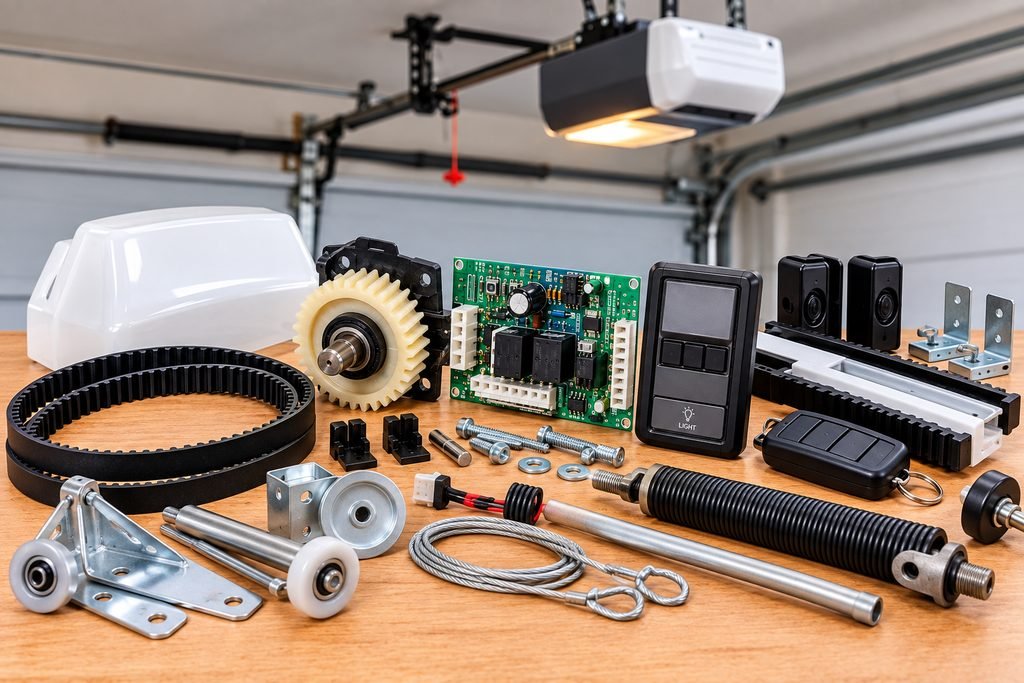
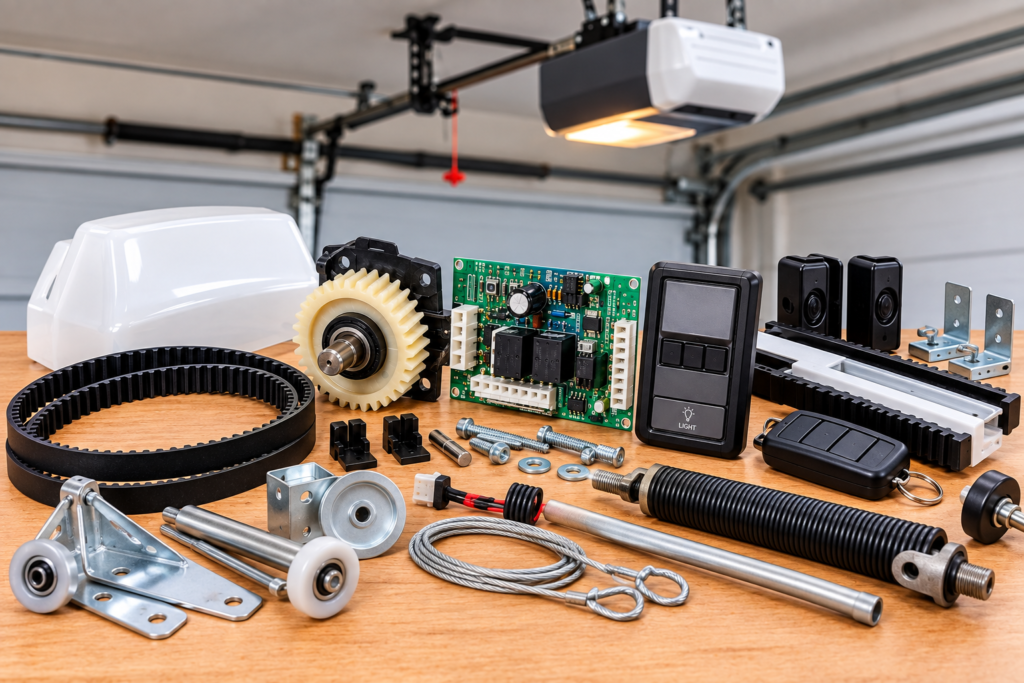
A garage door system contains many individual components. Rollers, hinges, brackets, cables, belts, gears, circuit boards, wall controls, light covers, and other hardware all have different functions. Because these components are designed for specific applications, choosing garage door replacement parts requires more than finding something that looks similar to the original.
The manufacturer, model number, part number, dimensions, drive system, and intended application can all affect compatibility. This is particularly important when searching for garage door replacement parts for older garage door openers, where several generations may look similar while using different internal components.
This guide explains how to identify the component you need, how to verify compatibility, which types of garage door replacement parts are commonly needed, and what to check before ordering.
What Are Garage Door Replacement Parts?
Garage door replacement parts are individual components used to repair, maintain, or restore a garage door or automatic garage door opener. They include both physical door hardware and mechanical or electronic components found inside an opener.
Door hardware can include rollers, hinges, brackets, cables, handles, tracks, and fasteners. Automatic opener components can include drive belts, gears, sprockets, circuit boards, wall controls, light lenses, and other model-specific components.
The correct replacement depends on the component that has failed. A worn opener belt requires a different solution from a defective logic board, while a broken roller is unrelated to a failed wall control.
That is why identifying the problem should come before purchasing garage door replacement parts. A broad search can produce many components, but only a small number may be compatible with your particular garage door or opener.
Identify the Failed Component First
Before ordering garage door replacement parts, determine what is actually causing the problem. Start by observing how the door and opener behave when you attempt to operate the system.
- Does the garage door open and close normally?
- Does the opener motor run?
- Does the door stop during travel?
- Does the opener make unusual noises?
- Does the wall control respond?
- Does the remote operate the system?
- Is there visible damage to a component?
- Does the door move correctly when operated manually?
These observations help separate mechanical problems from electrical or opener-related problems. An opener can be operating correctly while a damaged door component prevents normal movement.
Do not choose garage door replacement parts simply because they look similar to the original. Verify the manufacturer, model, part number, and compatibility information whenever possible.
Find the Garage Door or Opener Model Number
The model number is one of the most useful pieces of information when searching for garage door replacement parts. Manufacturers can produce multiple opener versions that share similar housings while using different internal components.
For an automatic opener, look for the identification label on the opener housing. Record the complete model designation rather than relying on a shortened product name.
If the original component has its own identification number, record that information as well. Having both the opener model and component number gives you more information to compare with available garage door replacement parts.
Why the Part Number Matters
A manufacturer’s part number provides much more precise identification than a general description. Searching for “garage door gear,” for example, can return numerous products designed for different opener models.
The same issue applies to belts, sprockets, circuit boards, wall controls, light covers, and other garage door replacement parts. Components that appear almost identical can have different mounting points, connectors, dimensions, or operating specifications.
Whenever possible, compare the part number printed on the original component with the part number listed for the replacement.
Common Garage Door Replacement Parts
Different sections of a garage door system use different replacement components. Understanding the purpose of common garage door replacement parts can make the identification process easier.
| Component | Typical Role | Important Information to Verify |
|---|---|---|
| Rollers | Help the garage door travel along the tracks. | Size, stem design, and application. |
| Hinges | Connect door sections and allow movement. | Door section and hinge position. |
| Belts | Transfer movement in compatible belt-drive openers. | Opener model and belt assembly. |
| Gears | Transfer mechanical power within compatible openers. | Model number and gear kit number. |
| Logic Boards | Control electronic functions inside compatible operators. | Board number and opener model. |
| Wall Controls | Provide an interior control interface. | Control type and opener compatibility. |
| Light Covers | Protect the opener’s lighting area. | Housing and lens compatibility. |
Mechanical Garage Door Components
Mechanical components experience repeated movement every time the door opens and closes. Rollers, hinges, brackets, cables, and other hardware can eventually wear or become damaged.
A mechanical problem should be distinguished from an opener problem. If the door itself binds or becomes difficult to move manually, replacing electronic garage door replacement parts may not address the actual cause.
Before purchasing mechanical garage door replacement parts, inspect the affected area and determine exactly which component is damaged or worn.
Garage Door Opener Replacement Components
Automatic garage door openers contain numerous serviceable components. Depending on the opener design, replacement options can include belts, gears, sprockets, logic boards, wall controls, light covers, and other garage door replacement parts.
Garage Door Operator Direct’s Garage Door Opener Parts category serves as the main hub for these operator components.
Using the category as a starting point can help narrow your search when you already know that the problem involves the opener rather than the door hardware.
Belts and Drive Components
Belt-drive openers use a belt assembly to transfer movement through the opener’s drive system. A damaged or worn belt may need to be replaced with a component specifically designed for the operator.
The available garage door belt replacement products should be compared against the opener model and application before ordering.
Because belt length and design can vary, choosing the correct belt is an important part of selecting compatible garage door replacement parts.
Gears and Sprockets
Gears and sprockets transfer mechanical power through compatible garage door opener drive systems. A worn gear can affect the way the opener transfers power and may produce unusual operating symptoms.
The garage door opener gear replacement category provides options that should be checked against the specific opener model.
Before ordering gear-related garage door replacement parts, compare the existing component, opener model, and listed part number.
Circuit Boards and Logic Boards
Electronic components require careful identification because different opener models can use different circuit boards. A board that physically resembles the original may still have different electrical or connector specifications.
The LiftMaster logic board category provides replacement options for compatible LiftMaster applications.
When shopping for electronic garage door replacement parts, always compare the board number and opener model before ordering.
Wall Controls and Wall Buttons
A wall control provides an interior interface for operating a garage door opener. Depending on the model, it may provide basic door operation or additional functions.
A wall-control problem does not automatically mean the entire opener has failed. The control, wiring, power supply, and related components should be considered when diagnosing the problem.
The LiftMaster wall control category contains wall-control options for various applications.
Light Covers and Lens Components
A light cover or lens protects the lighting section of an opener. These components can crack, become damaged, or disappear while the rest of the opener continues to function.
If only the cover has been damaged, replacing that component can be more appropriate than replacing the entire operator.
Review the LiftMaster light cover category when looking for compatible lighting-related garage door replacement parts.
How to Verify Compatibility
Compatibility should always be checked before purchasing garage door replacement parts. Use several pieces of information rather than relying on appearance alone.
1. Identify the Manufacturer
Start with the brand of the opener or door component. This helps narrow the available replacement options.
2. Locate the Model Number
Record the complete model number shown on the equipment identification label. This is particularly important when comparing model-specific garage door replacement parts.
3. Find the Part Number
If the original component has a part number, record it and compare it with the replacement.
4. Read Compatibility Information
Check the product listing for compatible models, applications, dimensions, and other specifications.
5. Compare Physical Specifications
Depending on the component, compare dimensions, connectors, mounting points, belt length, gear configuration, or other relevant measurements.
6. Confirm the Intended Application
Residential and commercial systems can use different components. Make sure the replacement is intended for your type of operator.
7. Confirm Before Ordering
If you cannot establish compatibility confidently, gather more information before purchasing garage door replacement parts.
Should You Replace a Part or the Complete Opener?
A failed component does not automatically mean that the complete opener needs replacement. If the existing operator is otherwise suitable and a compatible component is available, repairing it with the appropriate garage door replacement parts may be an option.
A complete opener replacement may be considered when multiple major components have failed, compatible replacement parts are unavailable, or the existing equipment is no longer appropriate for the garage door.
The decision should be based on the condition of the equipment, the specific failure, repair requirements, and availability of compatible garage door replacement parts.
Preparing for Replacement
Before installing garage door replacement parts, gather the opener model information, replacement part number, manufacturer’s instructions, and appropriate tools.
When appropriate, take photographs of the original component before removing it. This can help document connector locations, mounting positions, or component orientation.
Never force a component into position. If connectors, mounting holes, dimensions, or other important features do not match, stop and verify compatibility.
Garage Door Repair Safety
Garage doors are heavy mechanical systems, and components such as springs and cables can store significant energy. Spring and cable repairs can be hazardous and may require specialized training and equipment.
Automatic openers also contain electrical components. Follow the manufacturer’s procedures when disconnecting power before servicing electrical garage door replacement parts.
Never bypass safety sensors or other safety mechanisms simply to make an opener operate.
If a repair involves high-tension components or you are unsure how to safely perform the work, contact a qualified garage door professional.
Where to Find Garage Door Replacement Parts
Once you have identified the failed component, the next step is finding a replacement that matches the equipment. The correct garage door replacement parts should be selected according to the actual model and application.
The Garage Door Opener Parts category is the main pillar page for operator repair components on Garage Door Operator Direct.
From there, you can narrow your search to specific types of garage door replacement parts, including belts, logic boards, gears, light covers, and wall controls.
- Garage Door Belt Replacement
- LiftMaster Logic Board
- Garage Door Opener Gear Replacement
- LiftMaster Light Cover
- LiftMaster Wall Control
Manufacturer Reference for LiftMaster Parts
When identifying LiftMaster components, the official manufacturer resource can provide additional information about replacement components and compatible equipment.
Visit the Official LiftMaster Replacement Parts Resource
How to Avoid Ordering the Wrong Replacement Part
The easiest way to reduce mistakes is to identify the component before searching for a product. Do not begin by choosing the least expensive or most visually similar item.
Instead, determine what failed, record the opener model, identify the original part number, and compare the specifications with the replacement listing.
This process is especially valuable when purchasing garage door replacement parts for older equipment because several opener generations may share similar external designs.
Seven Essential Checks Before Ordering
- Identify the failed component. Determine what part is actually responsible for the problem.
- Record the manufacturer. Make sure the replacement is intended for the correct brand.
- Find the model number. Use the complete model designation.
- Record the original part number. This can make product identification more precise.
- Compare specifications. Check dimensions, connectors, configuration, and other relevant details.
- Review compatibility information. Confirm that the replacement is listed for your equipment.
- Consider repair safety. Do not attempt hazardous spring, cable, or electrical work without the appropriate knowledge and equipment.
Frequently Asked Questions
What are the most common garage door replacement parts?
Common garage door replacement parts include rollers, hinges, brackets, cables, belts, gears, circuit boards, wall controls, light lenses, and other model-specific hardware.
How do I know which replacement part I need?
Start by identifying the symptom and determining which component is responsible. Record the manufacturer, model number, and original part number before selecting replacement garage door replacement parts.
Can I use a similar-looking replacement part?
Not necessarily. Similar-looking garage door replacement parts can have different dimensions, connectors, mounting arrangements, or electrical specifications.
Do garage door replacement parts work across different brands?
Some components can be compatible with specific models from different product families, but compatibility should always be verified rather than assumed.
When should I replace a garage door opener part instead of the entire opener?
If the opener is otherwise suitable and a compatible replacement component is available, replacing the failed component may be an option. The overall condition of the equipment should also be considered.
Are garage door replacement parts difficult to install?
Installation difficulty varies by component. Some parts are relatively straightforward, while spring, cable, electrical, and certain drive-system repairs can require specialized knowledge and equipment.
Why is the model number important?
The model number helps distinguish between different opener generations and configurations. It is particularly useful when comparing model-specific garage door replacement parts.
Can a wall control problem make an opener appear broken?
Yes. A failed wall control or wiring problem can prevent normal operation. The control should be checked before assuming that the entire opener needs replacement.
Where should I start when searching for replacement components?
Start with the Garage Door Opener Parts pillar category and then narrow the search according to the failed component and the type of garage door replacement parts required.
Final Thoughts
The right garage door replacement parts can help restore a garage door system without unnecessarily replacing equipment that remains serviceable. Accurate identification is the most important part of the process.
Start with the symptom, determine which component is responsible, record the model and part number, and compare the replacement specifications before ordering. This approach can make it easier to find compatible garage door replacement parts for both newer and older equipment.
If your repair involves an automatic opener component, visit the Garage Door Opener Parts pillar page to browse the available categories of garage door replacement parts.
For LiftMaster equipment, you can also consult the official LiftMaster replacement parts resource for manufacturer reference information.