
Oct
7 Essential Garage Door Opener Chain Tips for Reliable Operation
A garage door opener chain is a key component in many residential chain-drive opener systems. It transfers movement from the opener’s drive mechanism to the trolley, allowing the automatic opener to move the garage door through its opening and closing cycle.
When the drive system is correctly installed and maintained, a garage door opener chain can provide dependable everyday service. Like other mechanical components, however, it can experience wear, adjustment problems, corrosion, or damage over time.
This guide explains how the system works, the components connected to it, common warning signs, maintenance considerations, replacement factors, compatibility, safety, and related garage door parts.
Table of Contents
- What Is a Garage Door Opener Chain?
- How the Drive System Works
- Main Components
- 7 Warning Signs
- Why Chain-Drive Openers Make Noise
- Maintenance and Inspection
- When Replacement Is Necessary
- How to Identify the Correct Part
- Related Drive Products
- Replacement Considerations
- Component Comparison
- Related Garage Door Resources
- Garage Door Opener Safety
- Frequently Asked Questions
- Conclusion

What Is a Garage Door Opener Chain?
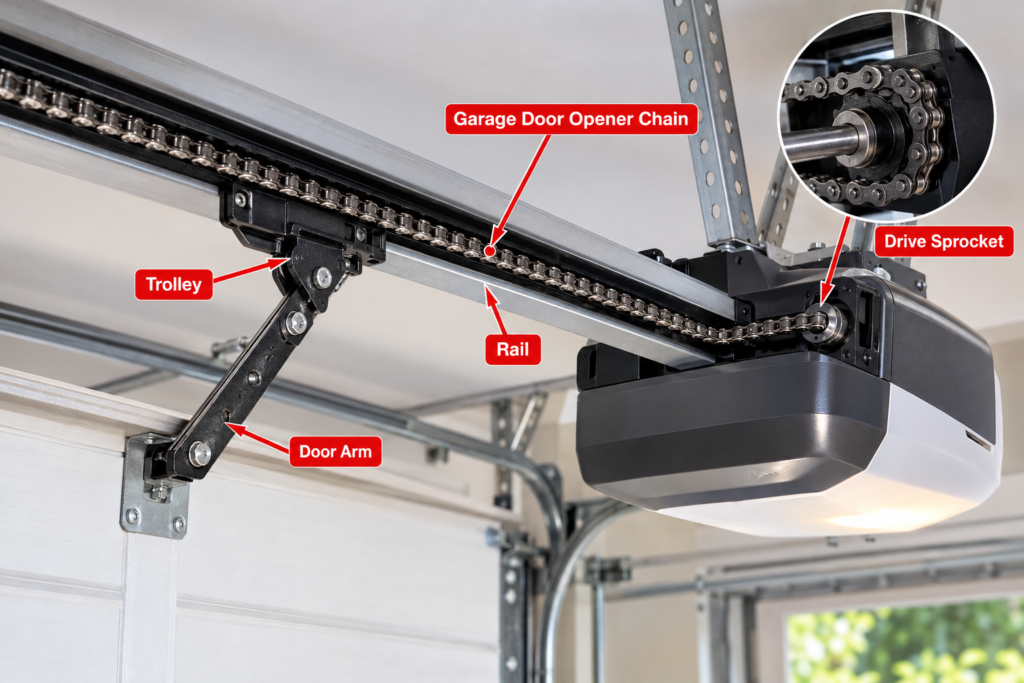
A garage door opener chain is the moving drive component used by a chain-drive automatic opener. It travels along the opener rail and connects the drive mechanism with the trolley.
When the motor activates, the drive sprocket engages the garage door opener chain and moves it along the rail. The movement causes the trolley to travel along its operating path.
The trolley is connected to the garage door through the door arm. As the trolley moves, the arm transfers that movement to the garage door.
Because the garage door opener chain forms an important mechanical connection between the motor and trolley, its condition can influence opener performance. It is still only one part of a larger system, so other components should also be considered when diagnosing a problem.
Important: Always verify the exact opener model before purchasing a replacement component. A part that looks similar may not be compatible with your specific opener.
How the Drive System Works
The operating cycle begins when the opener motor receives a command to move the garage door. The motor turns the drive mechanism, which engages the chain and moves the trolley.
The garage door opener chain travels along the rail as the drive mechanism operates. The trolley follows the movement and transfers force through the door arm.
This process allows a homeowner to open or close the garage door using a wall control, remote, keypad, or other compatible control device.
Every operating cycle places mechanical stress on the drive components. Usage frequency, installation quality, environmental conditions, maintenance, and the condition of the garage door can all affect component life.
Main Components
Drive motor
The motor provides the energy required to operate the opener. A motor issue can sometimes produce symptoms that appear to involve the garage door opener chain, even when the chain itself is not defective.
Drive sprocket
The drive sprocket engages the chain and transfers motor movement into the drive system. A worn sprocket can contribute to unusual noise or irregular movement.
Opener rail
The rail provides the travel path for the trolley. The chain operates as part of this rail-and-trolley assembly.
Trolley
The trolley travels along the rail and transfers movement from the drive system to the garage door.
Door arm
The door arm connects the trolley to the garage door. Problems with the arm or mounting hardware can affect operation even when the drive mechanism is working correctly.
7 Warning Signs
1. Excessive slack
Unusual slack can indicate that the garage door opener chain or another drive component requires inspection. Do not adjust it based only on appearance because adjustment procedures differ between opener models.
2. Sudden increase in noise
Some mechanical noise is expected from chain-drive systems. A sudden change in operating sound, however, may indicate an issue with the chain, sprocket, trolley, rail, motor, or garage door.
3. Jerky trolley movement
Jerky movement may be associated with the garage door opener chain, but it can also originate from the trolley, rail, sprocket, motor, or door hardware.
4. Visible damage
Visible corrosion, deformation, broken components, or abnormal wear should be investigated before continuing normal operation.
5. Repeated adjustment problems
If the drive system repeatedly appears to require adjustment, determine why instead of repeatedly changing the position of the garage door opener chain.
6. Unusual vibration
Excessive vibration can originate from several parts of the opener. Inspect the chain, sprocket, trolley, rail, motor, mounting hardware, and garage door.
7. Problems after a repair
If problems begin after a component has been replaced, confirm that the replacement part matches the opener model and that the installation procedure was followed correctly.
Why Chain-Drive Openers Make Noise
A chain-drive opener can naturally produce more noticeable mechanical sound than some other drive configurations. The garage door opener chain interacts with the drive sprocket, trolley, and rail during operation.
Normal mechanical sound does not automatically mean that the drive system is defective.
Grinding, repeated rattling, excessive vibration, or a sudden change in sound should receive attention.
Noise may originate from the chain, sprocket, trolley, rail, rollers, hinges, tracks, motor, or other garage-door components.
For related belt-drive information, visit Belt Drive Garage Door Opener.
For additional chain-drive information, visit Chain Drive Garage Door Openers.
Maintenance and Inspection
Maintenance requirements vary according to the opener model. The manufacturer’s manual should always be the primary source for servicing instructions.
Inspect the drive system
Look for visible damage, abnormal wear, corrosion, or conditions that could interfere with normal operation.
Inspect the sprocket
Because the sprocket engages the garage door opener chain, its condition should be considered when investigating unusual noise or movement.
Check the trolley
Make sure the trolley travels correctly along the rail without binding or abnormal movement.
Inspect the garage door
A garage door that binds, drags, or has damaged hardware can place additional stress on the automatic opener and its drive components.
Follow manufacturer instructions
Never use a generic adjustment procedure when the opener manufacturer provides model-specific instructions.
When Replacement Is Necessary
A garage door opener chain may require replacement when it is damaged, excessively worn, or otherwise identified as unsuitable for continued service.
Age by itself does not necessarily mean that replacement is required. The condition of the component and the manufacturer’s recommendations should be considered.
Before ordering a replacement, identify the exact opener manufacturer and model number.
Also check the existing part number when it is available. This can make it easier to compare the old component with the replacement information.
Do not assume that a replacement chain from another model will work simply because it has a similar appearance.
How to Identify the Correct Part
Compatibility is one of the most important considerations when replacing an opener drive component.
Before ordering a garage door opener chain, record the following information:
- Opener manufacturer.
- Exact model number.
- Existing part number.
- Garage-door height.
- Rail configuration.
- Required chain configuration.
- Manufacturer compatibility information.
- Installation requirements.
LiftMaster provides manufacturer parts information through its official parts resource. See LiftMaster Replacement Parts.
Using manufacturer documentation helps reduce the possibility of ordering an incompatible part.
Related Drive Products
The following products are from the belt product pool for this cluster. They are included as related drive-system parts and are not being presented as replacement chains.
41A5250 Belt Assembly
The 41A5250 Belt Assembly is a belt-drive component that can be reviewed when researching related garage door opener drive parts.
Genie 37561R-S Belt Assembly
The Genie 37561R-S Belt Assembly is another belt-drive replacement component in the supplied product collection.
LiftMaster 41A3589-1 Belt Assembly
The LiftMaster 41A3589-1 Belt Assembly is a related belt-drive replacement component available for compatible opener applications.
Compatibility reminder: These are belt assemblies. They should not be substituted for a chain component unless the manufacturer specifically confirms compatibility with the exact opener model.
Replacement Considerations
Replacing a garage door opener chain involves mechanical components and should be approached carefully.
The exact procedure varies by opener model. Always follow the manufacturer’s instructions rather than relying on a generic procedure.
- Identify the opener model.
- Confirm the correct replacement component.
- Review the manufacturer’s instructions.
- Prepare the opener according to the specified procedure.
- Inspect the sprocket and trolley.
- Install the replacement component correctly.
- Make any required adjustment according to the manual.
- Check trolley movement.
- Test the opener and safety functions.
Do not improvise adjustment procedures or substitute unrelated hardware.
Component Comparison
Understanding the components surrounding a garage door opener chain is important because a chain-related symptom does not necessarily mean that the chain is the source of the problem.
| Component | Main Function | Possible Symptoms |
|---|---|---|
| Drive chain | Transfers drive movement to the trolley. | Slack, wear, abnormal noise or movement. |
| Drive sprocket | Engages the chain. | Grinding, clicking or irregular movement. |
| Trolley | Travels along the opener rail. | Jerky or uneven movement. |
| Rail | Provides the trolley travel path. | Binding or abnormal travel. |
| Door arm | Connects the trolley to the door. | Door movement problems. |
| Garage door hardware | Supports and guides the door. | Binding, noise or uneven movement. |
This is why replacing a garage door opener chain should not automatically be the first response to every chain-drive problem. Proper diagnosis helps identify the actual component requiring attention.
Related Garage Door Resources
- Belt Drive Garage Door Opener
- Chain Drive Garage Door Openers
- Garage Door Pulley Repair
- Garage Door Drive Belt Replacement
For belt replacement products and related parts, visit Garage Door Belt Replacement.
Garage Door Opener Safety
A garage door opener chain forms part of an automatic system that moves a heavy garage door. Repairs and adjustments should therefore be performed carefully.
The U.S. Consumer Product Safety Commission provides information about safety requirements for automatic residential garage-door operators. See CPSC automatic residential garage-door-operator safety information.
Safety-reversing features should never be disabled to compensate for a mechanical problem.
After servicing the opener, test its operation and safety features according to the manufacturer’s instructions.
Frequently Asked Questions
What does a garage door opener chain do?
A garage door opener chain transfers movement from the opener drive mechanism to the trolley, allowing the trolley to move the garage door.
Why is my chain-drive opener noisy?
Some mechanical noise is normal. A sudden increase in sound can indicate an issue involving the chain, sprocket, trolley, rail, motor, or garage-door hardware.
Can I use any replacement chain?
No. The replacement must match the exact opener model and the manufacturer’s compatibility requirements.
What causes chain slack?
Possible causes include adjustment issues, wear, installation problems, or another mechanical issue. Follow the manufacturer’s instructions before making adjustments.
Should a noisy opener always receive a new chain?
No. Noise can originate from several components. Inspect the complete drive system before deciding that the chain is responsible.
How do I identify the correct replacement?
Start with the manufacturer and exact opener model number. Then compare the replacement information with the manufacturer’s parts documentation.
Can belt assemblies replace chain components?
Not automatically. Belt assemblies are designed for compatible belt-drive systems and should only be used where the manufacturer specifies compatibility.
When should the opener be inspected?
Inspection is appropriate when the opener develops unusual noise, abnormal movement, visible component damage, repeated operating problems, or safety-function concerns.
Conclusion
A garage door opener chain is an important mechanical component in many residential chain-drive systems. It transfers movement from the drive mechanism to the trolley and helps automate garage-door operation.
Understanding how the drive system works can make it easier to recognize problems such as unusual noise, visible wear, excessive slack, or irregular trolley movement.
However, these symptoms can also come from the sprocket, trolley, rail, motor, door arm, or garage-door hardware.
When replacement is necessary, identify the exact opener model and verify compatibility before purchasing a replacement component.
Following the manufacturer’s instructions during inspection, adjustment, and installation is important for reliable operation and proper safety performance.
Final tip: Verify the opener model and manufacturer’s parts information before ordering a replacement. Do not select a component based only on appearance.
